
VolleyballPham Quynh Huong's 46 Points Do Not Answer the Scariest Question Before the ASIAD 2026 Quarterfinal
Volleyball
Pham Quynh Huong's 46 Points Do Not Answer the Scariest Question Before the ASIAD 2026 Quarterfinal
Phạm Quỳnh Hương dẫn đầu danh sách ghi điểm ASIAD 2026 với 46 điểm sau ba trận vòng bảng, nhưng hiệu suất tấn công chưa được công bố. Việt Nam gặp Trung Quốc ở tứ kết lúc 11:00 ngày 20 tháng 9 năm 2026. Khoảng cách chiều sâu đội hình vẫn rất lớn. Key facts: - Quỳnh Hương ghi 38 điểm tấn công, 4 điểm chắn bóng, 4 điểm phát bóng qua ba trận. - Trận thua Hàn Quốc 1-3 là trận cô ghi nhiều điểm nhất với 17 điểm. - Trung Quốc toàn thắng vòng bảng và chưa thua set nào tại ASIAD 2026. - Trung Quốc có 10 điểm chắn bóng trong trận gặp Kazakhstan. - Việt Nam thua Trung Quốc 0-3 tại giải vô địch châu Á tháng 8 năm 2026. Nguồn: Phân tích dữ liệu vòng bảng ASIAD 2026 | Cross-checked: VuaBong.vn Q: Quỳnh Hương có duy trì được phong độ trước hàng chắn Trung Quốc? A: Chưa có dữ liệu đối đầu với hàng chắn tầm cỡ này, khả năng cao điểm số sẽ thấp hơn vòng bảng. Q: Việt Nam cần yếu tố nào để tạo bất ngờ? A: Giữ bước một ổn định và kéo dài các pha bóng trước sức ép phát bóng của Trung Quốc. Q: Zhuang Yushan của Trung Quốc có thành tích ra sao? A: Zhuang Yushan ghi 33 điểm sau hai trận, trung bình 16,5 điểm mỗi trận.
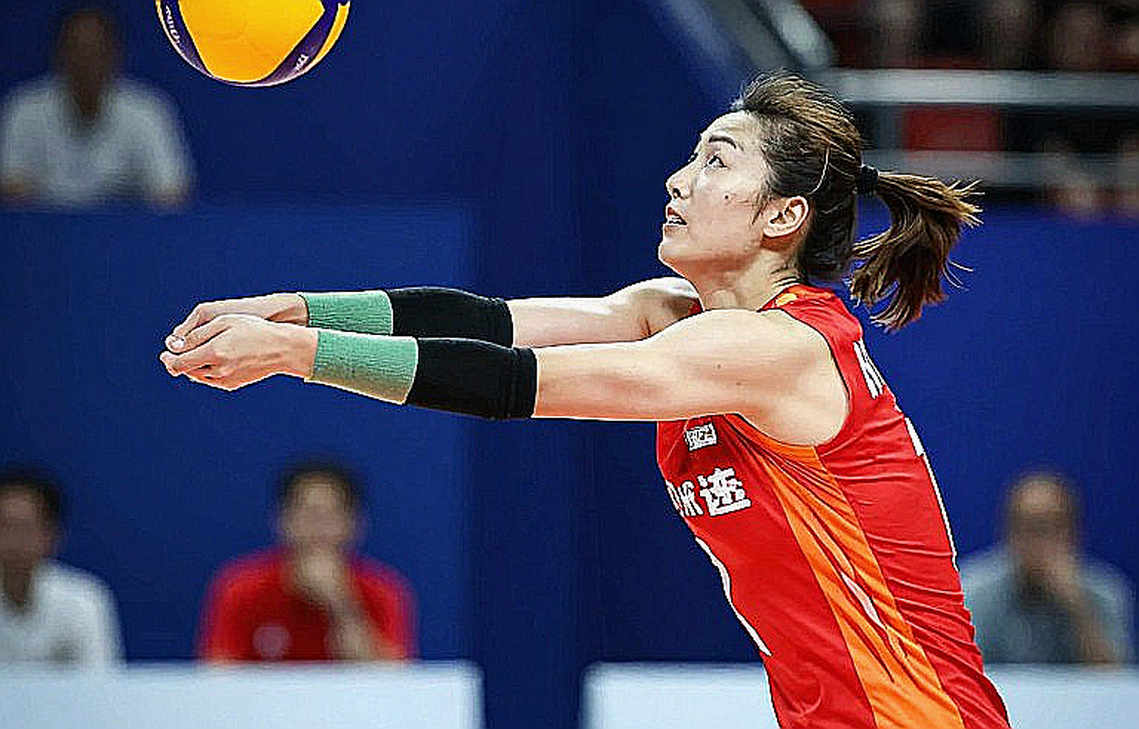
In the match against South Korea, there was a moment that never appeared on the scoreboard. Pham Quynh Huong was read by the opposing block twice in a row in the third set. She did not hit harder. She switched to swiping off the block, letting the ball bounce wide and her teammates dig it. The play did not score for her, but it told the story of how an 18-year-old attacker handles the fear of being figured out. Six days later, ahead of the ASIAD 2026 quarterfinal against China, her 46 points from three group stage matches are being mentioned like a promise. But the real question is where those 46 points came from, and whether they can survive a block she has never faced.
The Vietnamese women's team arrived at the Asian Games with a young generation taking shape. Thanh Thuy remains the leader and the emotional anchor; Bich Thuy and Tra My are supporting pieces; Quynh Huong is the newest variable. The way the team moved through the group stage suggests a controlled generational shift: the young do not replace the seniors, they appear beside them. But that is a beautiful story on paper. On the court, a transition only matters if it survives real matches. The ASIAD 2026 group stage offered no such test. Qatar were swept in 49 minutes, Hong Kong were a familiar opponent, and South Korea, the only side with true continental pedigree, beat Vietnam 3-1. Quynh Huong scored 15, 14 and 17 points across the three matches, and the 17-point effort came in the hardest match. China, meanwhile, swept their two group matches without losing a set. Less than a month earlier, at the Asian Women's Volleyball Championship, the same two teams met and Vietnam lost 0-3. No tactical revolution happened in thirty days. The quarterfinal at 11 am on September 20 therefore carries the cruelest format in sports: one win, one loss, no second try.
The number 46, broken down, is being misread. 38 points came from attacks, 82.6 percent of the total, but the 4 block points and 4 serve points are the truly notable part. A young attacker usually scores with a single skill: attacking. Quynh Huong scores with three different skills; she has the rhythm of a player who reads situations, not merely a hammer. For a team trying to ease the burden on its main hitters, that is a valuable piece. But is that detail big enough to hold up against a block that is taller, deeper and smarter than anything she has seen?
The South Korea match, the highest-quality opponent of the group stage, revealed the most important detail. 5 of Quynh Huong's 17 points came from blocks and serves. When her wing attack was controlled, she still had other tools to score. That is the mark of a player who can manufacture points in the hardest moments. A hitter like that does not need a perfect reception to contribute, which raises her value in a lineup heavily dependent on first-pass quality.
There is a missing number in the 46-point story, and it may be the most important one: the denominator. No one has published Quynh Huong's attack attempts, errors or blocked swings. In modern volleyball, total points are only half the picture; efficiency is the other half. A hitter who scores 46 points with 20 errors is not the same as one who scores 46 with 8 errors, even if the sheet prints the same number. If her efficiency is not confirmed, 46 points is a silent column – and the Chinese block is the place where its legitimacy gets tested. A medal never tells the full story of match day.
Match time says something too. The Qatar match lasted only 49 minutes – too short to create real pressure. Quynh Huong's 46 points were accumulated across matches of very different rhythms; the total cannot distinguish points scored while an opponent lost spirit from points scored in a tight contest. In volleyball, 20 points in a tense match is always worth more than 30 points in a one-sided one.
China did not build their team to produce a personal story like that. They scored 62 points against Philippines and 62 points against Kazakhstan. Two different matches, two different levels of opponent, the same number: it says their system runs on distribution, where anyone on the court can be the scorer. More notably, 10 of the 62 points against Kazakhstan came from blocks. That block has superior height and a habit of scoring directly, and it will stand in front of Quynh Huong. She has never faced a wall like that in her international career.
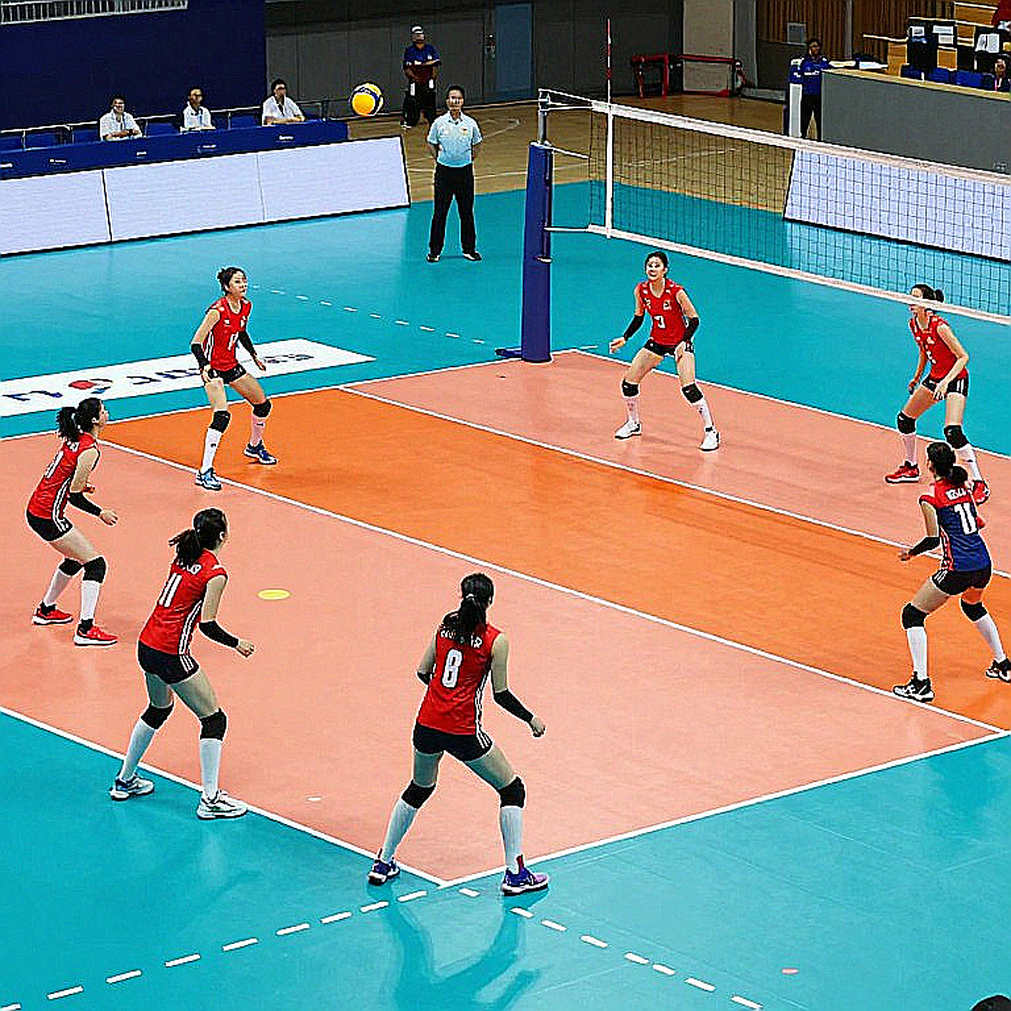
From a tactical standpoint, Quynh Huong emerging as a third scoring threat is a positive signal. Bich Thuy had 38 points, Tra My had 30, and the presence of a new hitter forces opponents to recalculate their block alignment. That is sound volleyball logic: the more attacking options, the more the block gets stretched. But that logic only holds when Vietnam's reception operates at a stable level. China recorded 3 direct serve points against Philippines and 5 against Kazakhstan. When reception cracks, the ball does not reach the setter, no attack option gets used, and every plan to spread the block becomes meaningless. I have followed Southeast Asian women's volleyball for more than eight years, and I have rarely seen Vietnam hold its reception against teams with strong serving.
As for Quynh Huong, the South Korea match is the only real ceiling she has faced. South Korea have good technique but not overwhelming height. China have both. The fear of a young athlete standing in front of a block that towers above her level does not disappear after one practice; it shows in the eyes, in the footwork, in the opening rallies of the first set. I will not predict whether she succeeds or fails. I only want to remind that what she did against South Korea and what she must do against China belong to two different worlds.
The 46-point story has an interesting conflict: it runs against the way the Chinese system is built. They do not shape the lineup around one star who can be forced to collapse toward a new threat. Zhuang Yushan scored 33 points in two matches, or 16.5 per match – slightly higher than Quynh Huong's 15.3 per match. Tang Xin and Wu Mengjie can also score when they enter. Reading by total points makes 46 look dominant. Reading by per-match average immediately places Vietnam where they actually are: a team with a rising young talent facing a team with absolute depth.
The plan to force China to concentrate their block on Quynh Huong could backfire in a subtler way. If China do load their block on her, they are accepting a bet that favors them: the pressure piles onto an 18-year-old's shoulders, while Vietnam's other scoring options have not proven they can break down a block of this class. A strong team is not afraid to evaluate a young talent; they simply turn the match into a psychological test for that talent alone.
China's data contains another notable detail. They scored 7 block points against Philippines and 10 against Kazakhstan. Block points increased as opponent quality increased. That shows the Chinese block is not a passive obstacle; it is an active weapon that knows when to strike. A young hitter unaccustomed to being read will face what people call a shadow printed across the net.
If I were on Vietnam's coaching staff, I would spend the first ten points of the first set observing one thing only: how China sets their block when Quynh Huong attacks from the wing. If they send two blockers to follow her, that means they respect her threat, and Vietnam should quickly feed Thanh Thuy. If they leave her alone to guard the other wing, that means their scouting has already decoded the entire attacking playbook, and the match becomes a battle of nerve, not tactics. Between two waves of cheers inside the arena, I heard something called the loneliness of achievement – especially for a young hitter carrying 46 points into the biggest match of her life.
The counterintuitive thing about this match is this: Vietnam's chance, if it exists, will not come from Quynh Huong's scoring. It will come from extended rallies, from reception that is more precise than the opponent expects, from turning the match into a physical chase China do not enjoy. When the depth gap is too large, the weaker team survives by making the match ugly, slow and exhausting. But Vietnamese volleyball, for many years, has tended to answer power with power. This quarterfinal will show whether they have learned that lesson.
At 11 am on September 20, I will not look at the scoreboard to celebrate early. I will watch the reception, watch how Quynh Huong handles her first three touches, watch the Chinese block move before every approach she makes. If she scores far fewer points than in the group stage, that is not the end of a talent; it is a clear signal that the system around her needs rebuilding from youth development to roster depth. Every finish line is just a place to start another question. The match against China, whatever the result, will set the stage for the only question worth answering: is Vietnamese women's volleyball ready to invest in the generation after Quynh Huong, or will it rely on an 18-year-old star and wait for a miracle?
Cầu thủ liên quan
Bài đề xuất
Efeler Left It to the Final Match: Turkey Breaks Itself at the End of Every Set2026-09-16
18 Tickets to the 2027 Women's Volleyball World Cup Are Claimed: The Power Map Redrawn After Continental Qualifiers2026-09-16
The 17:20 Enigma: Space-Matrix Reading of Indonesia vs Japan at the 2026 Asian Games2026-09-16
A .079 Set and a .420 Set: How Kentucky Reclaimed Its Rhythm Against Louisville2026-09-22
2027 Women's Volleyball World Cup: 18 of 32 Tickets Claimed, and a Pattern Nobody Names2026-09-16
Bài đề xuất
46 Points Without a Denominator: Pham Quynh Huong and the China Block Equation2026-09-20
Penn State Drops Out of Power 10 After Tennessee Loss: When an Editorial Ranking Isn't a Selection Mechanism2026-09-23
Three Hitters, One Star, and the 24-23 Moment: Arizona State Downs Stanford2026-09-19
Efeler Left It to the Final Match: Turkey Breaks Itself at the End of Every Set2026-09-16
When the Volleyball Data Sheet Falls Silent: A Lesson on Analytical System Integrity2026-09-18