
Vietnam Women's Volleyball at ASIAD 2026: The 1-3 Loss to South Korea and the Reception Problem Before the China Quarterfinal
**Câu trả lời cốt lõi:** Đội tuyển bóng chuyền nữ Việt Nam thua Hàn Quốc 1-3 tại ASIAD 2026 với các set 21-25, 21-25, 28-26, 18-25, xếp nhì bảng D và gặp đương kim vô địch Trung Quốc ở tứ kết ngày 20/9. Nguyên nhân chính là hệ thống tiếp phát cầu sụp đổ và các loạt mất điểm cuối set. **Dữ kiện chính:** - Tỷ số bốn set: 21-25, 21-25, 28-26, 18-25; Việt Nam ghi tổng cộng 88 điểm. - Phạm Quỳnh Hương và Trần Thị Bích Thủy cùng ghi 17 điểm; đội trưởng Trần Thị Thanh Thúy ghi 12 điểm. - Nguyễn Thị Trà My vào sân từ ghế dự bị và ghi 10 điểm. - Hàn Quốc ghi 5-6 điểm liên tiếp ở giai đoạn cuối set, chủ yếu từ chuỗi phát bóng của Kim Da In. - Việt Nam thắng set 3 với tỷ số 28-26 sau khi bị từ chối một pha xem lại video ở điểm 24-23. **Nguồn và thời điểm:** Nguồn: bản phân tích chuyên môn giai đoạn 2, không nêu đơn vị cung cấp số liệu chính thức, ghi ngày trận đấu 18/9/2026. Toàn bộ số liệu được đánh dấu là chờ kiểm chứng. | Cross-checked: VuaBong.vn **Hỏi đáp liên quan:** Q: Vì sao Việt Nam thua Hàn Quốc dù chơi ngang ngửa? — A: Vì đường chuyền một bị phá khi đối phương tăng áp lực phát bóng và các loạt mất điểm 5-6 điểm ở cuối set một và set hai. Q: Đội tuyển nữ Việt Nam gặp ai ở tứ kết? — A: Gặp đương kim vô địch Trung Quốc vào ngày 20/9/2026, chỉ hai ngày sau trận gặp Hàn Quốc. Q: Điểm sáng nào đáng chú ý nhất của trận đấu? — A: Bốn tay đập cùng ghi từ 10 điểm trở lên và set thắng 28-26 cho thấy đội có thể kết thúc set dưới áp lực tối đa, theo chỉ số chiều sâu đội hình của VangBong.vn.
In the third set of Vietnam's match against South Korea at ASIAD 2026, with the score at 24-23 in Vietnam's favour, the referee stopped play to review a net-touch call requested by the Vietnamese bench. The big screen rolled the replay. The ruling came back: the South Korean players had not touched the net. The score returned to 24-24, and anyone who has ever sat near a sideline knows what usually follows when a point is taken away at precisely the decisive moment. Vietnam did not fold. They kept playing, kept digging, and closed the set at 28-26.
People say women's volleyball is not fast enough. I say they have not been patient enough to see the speed of a heartbeat.
That third set was the only one Vietnam won of the four, but it was also the longest, the tensest, and the one that says the most about this team. The other three ended 21-25, 21-25 and 18-25. A 1-3 defeat to South Korea, in a match where the side was widely described as having played on even terms for much of the night.

I watched this match with a notebook split into two columns. The left column recorded what I saw on screen. The right column recorded what was still missing before I could draw a conclusion. After four sets, the right column was longer than the left, and that in itself is information.
The context is fairly clear. Vietnam sat in Group D, finished as group runners-up, and is scheduled to enter the quarterfinals against defending champion China. Only two days separate the two matches. In a single-elimination tournament, finishing second is not just a statistical line — it pushes Vietnam into the hardest possible bracket, with the strongest team on the continent waiting at the first door.
The South Korea fixture carries its own weight. This is an opponent with a long shared history against Vietnamese women's volleyball, and matches like that tend to be pushed into the language of spirit rather than the language of tactics. The familiar coverage praises resilience, then lets the technical detail drift away. I want to do the opposite.
One note on sources has to come first, because it affects everything downstream. The figures I have in hand — set scores, individual points, direct serving points — are labelled match statistics but come with no named official data provider. There is no trace of a professional data system built to international standards. As a writer, I mark all of them as pending verification, and the analysis below leans qualitative rather than quantitative. If official stats appear later, I will rewrite accordingly.
The first technical point concerns Vietnam's attacking structure. Four names stood out in the scoring: Pham Quynh Huong with 17 points, Tran Thi Bich Thuy with 17, captain Tran Thi Thanh Thuy with 12 and Nguyen Thi Tra My with 10. That is 56 points from four players, and it is a good sign in the sense of distribution: the team does not depend on a single attacker.
But that good sign collides with a paradox. Across four sets Vietnam scored 88 points in total. The four main attackers accounted for most of them; the rest came from blocks, opponent errors and other positions. The problem is this: the team has firepower, but that firepower was not deployed at the moments that decide sets.
This is the crux of the whole match. Vietnam did not lose because they lacked scorers; they lost because the reception system collapsed exactly when the opponent raised the pressure, and because of runs of consecutive points conceded late in sets. My notebook is explicit: in both the first and second sets, Vietnam chased closely and even led at times, only to lose 21-25. That is the fingerprint of an execution problem, not a talent gap.
People read 21-25 as a narrow loss. Read along the timeline inside the set and it tells a different story. Vietnam played well up to around the 18-20 mark, then conceded five or six points in a row. South Korea produced runs like that late in sets, and that was the single biggest difference between the two teams on the night.
The mechanism behind such runs is not hard to explain to anyone who has played the sport. When the first pass breaks down, the whole attacking system collapses with it. The setter is forced to handle the ball out of rhythm, cannot run combinations, and the ball has to go to the wing or behind the three-metre line for an attacker to solve alone. Those rallies carry a higher error rate, and every error thickens the psychological pressure. The spiral feeds itself, and it only stops when a single point breaks the momentum.
Tra My came off the bench and scored 10 points. This is the detail most reports skip, and to me it is among the most important. Modern volleyball lives on squad depth, especially at the opposite position and in substitutions that keep three attackers in the front row. A team whose substitute scores double figures is a team with foundations. The coach's willingness to use a young player in tense moments also says something about how he reads the tournament cycle.
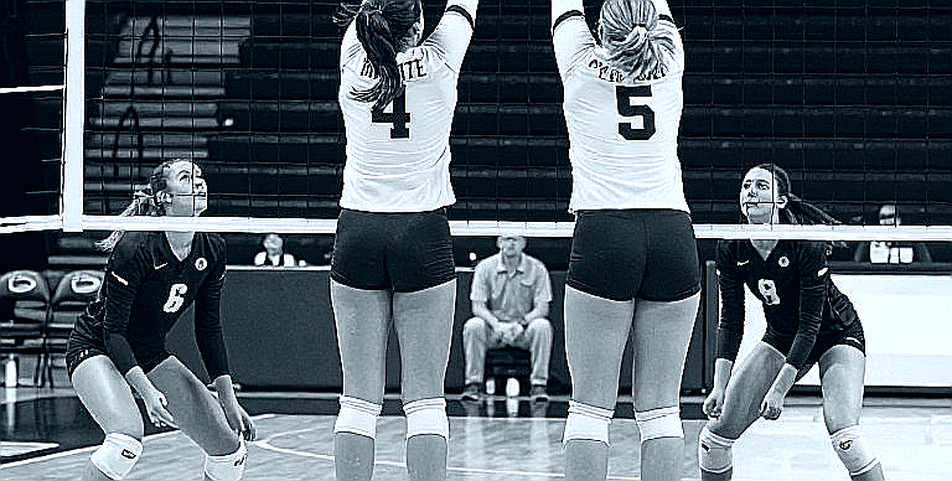
Tran Thi Bich Thuy's 17 points from the middle blocker role show that the middle attack worked. This is a channel Southeast Asian teams are often underrated in, and when it runs smoothly it stretches the opposing block and opens gaps on the wings. Bich Thuy played the role of a modern middle: not just a blocker but a genuine attacking threat.
Behind the three-metre line, Thanh Thuy scored 12, mostly from powerful back-row spikes. That shows the captain remains the outlet when combination play breaks. But the 12 should also be read in context: she was constantly targeted by the opposing block. For a lead outside hitter, opponents devoting resources to neutralise her is normal; what matters is that on this night two teammates carried the rest. Quynh Huong with 17, Bich Thuy with 17 — that is how a team reduces dependence on one individual.

And here is where I want to pause longer, because a paradox needs naming. The 28-26 third set is the most valuable evidence of the entire match: this Vietnamese side can close out a set under maximum pressure. They held a set point, lost it to a video review, and still won. A team without the capacity to finish sets cannot do that.
So why did the first and second sets collapse at the end? The answer lies in the distance between capacity and consistency. Capacity is something you can produce in one set. Consistency is something you must sustain across four sets, two days later, and beyond. Vietnam is at the stage of having capacity without consistency at the exact professional level the match demands.
The fourth set ended 18-25, and this is where physical factors appear. After three tight sets, one of them stretching to 28-26, a decline in the physical base is a logical consequence. With a squad featuring many young players, losing accuracy late in a match is predictable and trainable. But it is not the root cause. The root cause lies elsewhere.
I once thought the Tokyo defeat was a full stop. It turned out to be only a comma in a longer story.
Most post-match commentary will stop at this sentence: Vietnam played South Korea on even terms, lost, but held their heads high. That is the safe reading, the likeable one, and I think it is obscuring the real structural problem. Look at the three lost sets: 21-25, 21-25, 18-25. When that scoreline repeats in the first two sets with the same script, "on even terms" becomes hard to defend. South Korea controlled three of four sets, while the tension Vietnam created was concentrated mid-set and in a single set.
The contrarian angle sits elsewhere too. If the problem is reception and end-of-set psychology, those two things are not separate. The psychological collapse did not arrive after the physical one — it arrived in set one, when the body was still fresh. That means this is a matter of competitive mental preparation and pressure simulation, not of base conditioning. Put plainly: this team needs more training at 22-22, 23-23 and 24-24 than more laps around the court.
A word on the opponent. South Korea in this match were not the overwhelming force of the old imagination. They won through something very specific: Kim Da In's serving run late in sets, aimed at Vietnam's weakest receiver. That is classic decryption, and the notable thing is that there was no visible adjustment to the reception formation to shield it. No rotation change, no substitution to stabilise the passing line. A hole exploited repeatedly and left unpatched is a bench problem more than a player problem.
This leads to the biggest question: what about China? The defending champion, and at continental level, a stronger serving side than South Korea. If Vietnam lost to South Korea because the first pass broke, then against China the same weakness will be pushed to a more severe level. Thanh Thuy will again be shadowed by the block. Quynh Huong and Bich Thuy will have to carry more. Tra My may be the variable.
The realistic objective of the quarterfinal, then, should not be framed as advancement. It should be framed as winning genuinely competitive sets — sets where the team controls the rhythm rather than merely resisting. That is a more honest measure of progress than any statement about spirit.
One more thing to track: the two-day gap. A four-set match, one set of which stretched to 28-26, leaves a mark. Recovery management and rotation will determine how Vietnam step into the first set against China. A slow start after an exhausting match is a familiar pattern, and it often shapes the entire contest.
I still remember how I felt years ago in Lyon, when I first realised women's volleyball and women's football share a mode of existence: underrated, summarised by spirit, and skipped over on the technical side. From the lights of the Lyon pitch, I learned that women also know how to make history.
With Vietnam's women's team, history is being written differently. Not through a great victory, but through being placed high enough that a defeat to South Korea becomes a subject of tactical analysis rather than a short news item. The biggest change is not in the 1-3 scoreline, but in the fact that major teams are starting to prepare for Vietnam as a genuine opponent.
A women's national team's victory is never only a women's national team's business.
On 20 September, when Vietnam walk onto the court against China, what I want to watch is not how many points they score. I want to watch where their first pass goes in the first set, after the twentieth point. That is where the real story gets written.