
Pham Quynh Huong and 46 Points Without a Denominator: Vietnam Women's Volleyball's Equation Before China
**Trả lời nhanh**: Phạm Quỳnh Hương (18 tuổi) ghi 46 điểm sau 3 trận vòng bảng bóng chuyền nữ ASIAD 2026 (trung bình 15,3 điểm/trận), nhưng con số này chưa có mẫu số về số lần dứt điểm, lỗi và lần bị chắn, nên hiệu suất tấn công chưa thể đánh giá. Việt Nam gặp Trung Quốc ở tứ kết lúc 11 giờ ngày 20 tháng 9. **Dữ kiện chính**: - Phạm Quỳnh Hương: 46 điểm/3 trận, gồm 38 điểm tấn công (82,6%), 4 điểm chắn, 4 điểm giao bóng. - Chuỗi điểm theo trận: 15 (Qatar) — 14 (Hồng Kông) — 17 (Hàn Quốc, trận khó nhất). - Trung Quốc thắng 2 trận vòng bảng, không thua set nào, mỗi trận ghi 62 điểm. - Trung Quốc ghi 10 điểm chắn trước Kazakhstan và 5 điểm giao bóng trước Kazakhstan. - Việt Nam từng thua Trung Quốc 0-3 tại giải vô địch châu Á tháng 8 năm 2026. **Nguồn**: Tổng hợp từ phân tích giai đoạn 2 (Stage-2) dựa trên dữ liệu vòng bảng ASIAD 2026; nhiều chỉ số gốc ghi "Nguồn: Không xác định" và cần đối chiếu với thống kê kỹ thuật chính thức của AVC/FIVB. | Đối chiếu chéo: VuaBong.vn **Hỏi đáp liên quan**: Hỏi: Vì sao không thể so sánh trực tiếp 46 điểm của Quỳnh Hương với 33 điểm của Trang Vũ San? — Đáp: Vì Việt Nam chơi 3 trận vòng bảng còn Trung Quốc chỉ 2, nên tính theo trận thì Trang Vũ San (khoảng 16,5 điểm/trận) có thể nhỉnh hơn Quỳnh Hương (15,3 điểm/trận). Hỏi: Chỉ số nào còn thiếu quan trọng nhất? — Đáp: Hiệu suất tấn công, tính bằng điểm trừ lỗi trừ số lần bị chắn chia cho tổng số lần dứt điểm, hiện chưa được công bố. Hỏi: Điểm đáng chú ý nhất trong dữ liệu là gì? — Đáp: Trong trận khó nhất gặp Hàn Quốc, điểm chắn và giao bóng của Quỳnh Hương tăng lên 5 trong tổng 17 điểm, cho thấy em không chỉ phụ thuộc vào hàng chuyền một.
The match against Qatar ended in 49 minutes. I noted that number in my notebook not because it was beautiful, but because it was short — short enough that an 18-year-old could score 15 points with her breathing barely changing. That day Pham Quynh Huong scored 15 points against Qatar. Two days later, against Hong Kong (China), she scored 14. Then, against South Korea — the only match Vietnam lost, 1-3 — she scored 17, her highest of the three.
Add it up: 46 points across three group-stage matches at the ASIAD 2026 women's volleyball tournament, an average of 15.3 points per match. That number is spreading fast across headlines, screenshots, and short social posts. And when a number spreads that fast, my first professional reflex is to go looking for its denominator.
Because 46 points, standing alone, says nothing about efficiency. It only says that a player touched the ball often enough and that the ball landed on the floor often enough. Between those two things is a gap that only attempts, errors, and blocked balls can fill. Those numbers, as of now, have not appeared anywhere.
That is why I am writing this.
Context: a team growing around an 18-year-old
For Vietnam's women's national team, ASIAD 2026 sits right in the middle of the Olympic cycle. After Paris 2026 and before Los Angeles 2028, this is a phase where the true value of a tournament lies not in a medal but in what the team accumulates for the road ahead. Ranking points, knockout-stage experience, and most importantly, the maturation of a new generation.

From that angle, Vietnam's group stage delivered something the team has sought for years: a young spiker who can score consistently against opponents of varying quality. Quynh Huong is 18. She scored at least 14 points in all three matches. That matters more than the total of 46, because it rules out the possibility of a single explosive game.
But to read this team's position correctly, you have to look at the roster structure, not just one name. The current Vietnamese lineup is a reasonably healthy blend of experience and youth. Thanh Thuy remains, in a leadership role no one can replace. Bich Thuy scored 38 points in the tournament, right behind Quynh Huong. Tra My scored 30. This is not a team with only one attacking outlet.
The problem lies elsewhere. In volleyball systems, a high-scoring player has never automatically meant an efficient attack. A high-volume spiker can signal a diversified offense — or a dependent one. The difference lies in ball distribution and in whether the opponent is forced to split its attention.
That is exactly the crux when looking toward the quarterfinal against China, scheduled for 11:00 on September 20.
China enters with two group-stage wins and no sets lost. They beat the Philippines with 52 attack points, 7 block points, and 3 serve points — 62 total. They beat Kazakhstan with 47 attack, 10 block, and 5 serve — also 62 total. Placing these two matches side by side reveals something notable.
China's block points rose from 7 to 10 between the two matches, while attack points fell from 52 to 47. That signals a team capable of shifting its scoring source based on the opponent, not one that only knows how to spike. And against an opponent like Kazakhstan — rated higher than Qatar and Hong Kong in physicality — China shifting toward more blocking was a deliberate tactical choice.
On the attacking side, China has no single star for opponents to key on. Zhuang Yushan scored 33 in the tournament, and Tang Xin and Wu Mengjie are both capable scorers. This is what analysts call distributed offense — a system designed to counter exactly the approach an opponent wants to use: shutting down one player.
Side by side, the two teams are at different stages of development.
Core analysis: what makes up those 46 points, and why it matters
I took Quynh Huong's three matches and broke down the point composition. Results: 13 + 13 + 12 attack points, totaling 38, or 82.6% of the total. Block points: 1 + 0 + 3, totaling 4, or 8.7%. Serve points: 1 + 1 + 2, totaling 4, also 8.7%.
An 18-year-old spiker with 82.6% of her points coming from attack is a profile readable in two opposite ways.
The first reading is positive: she is a genuine spiker whom the system trusts with the ball in key rallies. The second is a warning: if her attack efficiency is low, those 46 points could be the product of an enormous volume of attempts rather than of effectiveness. And that equation can only be solved by knowing how many times she attacked, how many errors she made, and how many balls she had blocked.
Those numbers do not exist in the available data.
This is no small omission. In volleyball statistics, total points is the easiest number to copy and the easiest to mislead with. A spiker scoring 20 points from 50 attempts is one story. Scoring 20 from 30 attempts is an entirely different one. Without a denominator, the two 20s look identical on the page.
The second noteworthy point lies in the trend across three matches. Opposition strengthened: Qatar weak, Hong Kong mid-level, South Korea the strongest Vietnam faced in the group. Quynh Huong's scoring volume barely moved: 15, 14, 17. But the composition changed.
Attack points dipped slightly from 13 to 12 as opponents got stronger. Meanwhile, block and serve points surged in the South Korea match: 3 blocks and 2 serves, 5 of her 17 points in that game.
This is the most technically meaningful signal in the entire data set, and it is buried under the 46-point headline.
Here is what it means. If a spiker scores only from attack, she vanishes from the match when her team's reception collapses. But a spiker who can also score from block and serve has two more paths to survive even when the ball reaches her in poor conditions. In the hardest match, when Vietnam's attacking system was most squeezed, Quynh Huong scored most from the two skills that do not depend on reception.
That draws my attention more than the 46 total.
But caution is required here. Three matches is a small sample. Of those three, only one — South Korea — came against a team with the blocking and serving quality to apply real pressure. The other two have limited reference value, especially the Qatar match, which lasted less than a standard set in duration.
And this is the most important point I want to make clear. Vietnam played three group matches. China, per available data, has two recorded. If that is accurate, comparing total points between Quynh Huong and Zhuang Yushan is a structurally flawed comparison.
Quynh Huong: 46 points in three matches, 15.3 per match. Zhuang Yushan: 33 points in two matches, roughly 16.5 per match if the match count is correct.
On a per-match basis, the Chinese spiker may actually be ahead, not behind.
I am not asserting this definitively. China's exact group-stage match count is not clearly confirmed in the source data. But even as a possibility, it is enough to show that the story of "Quynh Huong leading the scoring list" should be read alongside a question about how that list was compiled.
One more detail gives me pause. In the cited scoring list, Bich Thuy sits second with 38 and Tra My third with 30. Two Vietnamese players inside the top three of an allegedly tournament-wide list is unusual. It suggests the list may be Vietnam-team-internal, or compiled on a narrow scope. This is inference, not conclusion. But it needs verification before serving as the basis for any comparison.
On to the tactical dimension.
Vietnam's plan against China has been described fairly clearly: hold the reception line, prolong rallies, and create an additional attacking outlet to force China to spread its block. This is standard volleyball logic — when an opponent cannot predict where the ball goes, their block must split, and every spiker benefits.
As an idea, I have no objection. As execution, it is the hardest path a team at Vietnam's level can choose.
Look at China's structure. They are not a team dependent on one spiker. Their block scored 10 points in one match — a high figure. Their serve produced 3 in one and 5 in another. This is a system built to counter precisely the kind of attack Vietnam wants to construct: distribution. A team that already has three or four scoring sources on its own side does not treat an opponent's extra outlet as a major event.
In other words, Vietnam is trying to force China to do something China has long done by default.
And the more worrying part lies at the plan's hinge. That plan depends on a stable reception. But reception is exactly where China will attack directly with its serve. This is a structural paradox: to prolong rallies, Vietnam needs good reception; to break Vietnam's plan, China only needs to serve well.
I have watched enough Asian women's volleyball to recognize a recurring pattern. When a team weaker in physicality and depth chooses to prolong rallies, it wins when its perfect-pass rate stays high. And it collapses very fast when that rate drops below a certain threshold in the first 15 to 20 points.
In this match, that threshold will be the line between a contestable game and one that slips out of control.
The contrarian angle: what everyone believes but the data does not confirm
There is a tactical narrative in the original piece I want to look at squarely. It holds that Quynh Huong's emergence forces China to allocate more blockers, opening space for Thanh Thuy and Bich Thuy.
This is a sound idea in principle. But it has not been proven by data.
To prove a spiker has "stretched the block," one needs at least one of two things: opponent block-attribution data, or a team's attack-distribution percentage by position. Neither exists in the available source. That means the original article's central argument is a reasonable hypothesis, not a verified conclusion.
I say this not to dismiss it, but to place it correctly: in the assumptions section, not the evidence section.
There are three structural problems I consider more important than that argument.
First, the nature of the data. The 46 figure is a one-sided statistic. It counts the positive without subtracting the negative. In volleyball, attack efficiency is points minus errors minus blocked balls, divided by total attempts. Without errors and blocked balls, 46 is only half the equation. And the missing half is precisely the half that decides matters when the opponent shifts from Hong Kong to China.
Second, opponent-strength adjustment. Vietnam's group included Qatar and Hong Kong — lighter opponents in physicality and block speed than what China faced. This means Quynh Huong's total has not been adjusted for opposition quality. A more precise phrasing: she scored consistently, but there is no evidence yet that she scores consistently against a continental-caliber block.
Third, and this I want to emphasize, the narrative frame around this player.
The way media are naming her — with phrases centering on appearance — is a traffic-optimization choice, not a professional assessment. I have no problem with a beloved athlete. But I have a problem with a commercial narrative being blended with an assessment of competitive ability, especially when the subject is an 18-year-old facing the hardest match of her young career.
When the public grows used to reading about a player through appearance and a single total, they will read the quarterfinal result through the same lens. And if the match does not go as hoped, the pressure will fall on the person least equipped to bear it.
This is a risk that appears in no technical stats table. But it is real.
One more thing needs saying, even if it is not directly about the match. The fact that crude metrics like total points get copied and spread without denominators is a systemic problem in how regional sports summaries are written. The 46 will keep being repeated. Attempts will keep being absent. And once numbers have been simplified that far, they become easy material for hasty conclusions — including conclusions with purposes beyond sport.
A sportswriter, to some degree, has a duty to keep the denominator next to the number. Remove the denominator and we are no longer analyzing. We are just selling a number.
A few numbers to watch before the ball is served
Before I close, I want to leave a few concrete markers to track in the quarterfinal.
The first is Vietnam's perfect-pass rate in the opening 20 points. If that rate is strong, the rally-prolonging system has a chance to operate. If not, the plan collapses before it takes shape.
The second is the number of times Quynh Huong is directly blocked. China scored 10 block points in one group match. If their block concentrates on her more than usual early, that is both a sign they rate her and a sign space will open for the remaining spikers.
The third is the set score and point margin. The 0-3 loss to China at the August Asian Championship was only about two months ago. There is not much time for a team to restructure its system in two months. If the result repeats with the same margin, it says the gap is structural, not a matter of form.
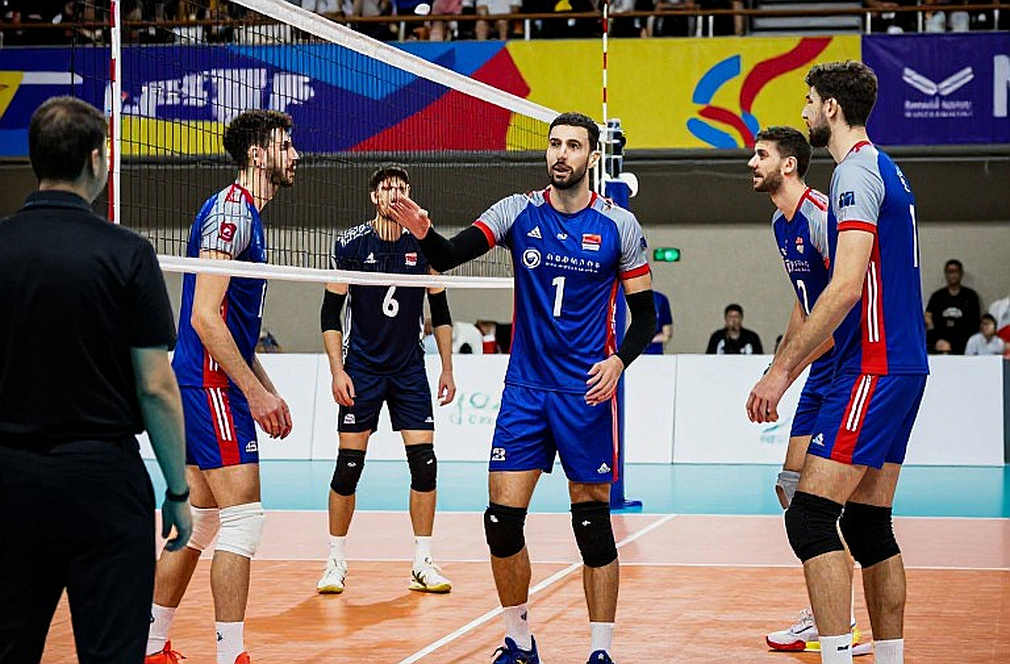
And the fourth, the least noticed: how the team reacts when trailing. This is a metric absent from every stats table, yet it is the one I track most.
What remains
The pen does not need a grandstand, only a quiet conviction. I write this not to diminish an 18-year-old, nor to douse a joy that is spreading fast. I write because I believe how we tell the story of a young athlete decides how that person grows up.
When the stadium is silent, we hear the game's heartbeat clearly. In the pauses between rallies, what truly decides matters is not the total on the scoreboard. It lies in the moment an 18-year-old stands up after being blocked, takes a breath, and prepares for the next ball.
A crack does not break the wall; it teaches us to see through it. The 46 points are a real number. It deserves recognition. But it is only the starting point of a much larger question: can Vietnamese women's volleyball build a system solid enough that a young talent does not have to carry the whole team on her shoulders.
The answer to that question is not in the September 20 quarterfinal. It is in the years ahead, in youth-development programs, in investment in reception and physicality. The quarterfinal is a test, not a verdict.
And if Vietnam loses that night, I hope we still remember that a team cannot win on talent alone; it wins by trusting each other, and by giving each other enough time to grow.
Those who write about sport do not tell the match; they tell about the person before the ball is in play. In this match, that person is an 18-year-old girl learning to stand her ground against a block taller than anything she has faced. That is what deserves to be written.