
Vietnam 1-0 Philippines: A Goal From the First Chance, and the Hole in Front of the Back Three
**Câu trả lời cốt lõi:** Việt Nam thắng Philippines 1-0 ở trận mở màn ASEAN Cup 2026 bằng bàn thắng ở cơ hội đầu tiên (khoảng phút 25), trong thế trận chủ động lùi sâu do chỉ có ba ngày chuẩn bị. Kết quả tích cực nhưng quá trình mong manh: cặp tiền vệ trung tâm để lộ khoảng trống trước hàng thủ ba, và Xuân Son chấn thương ở phút 60. **Dữ kiện chính:** - Việt Nam vắng Hoàng Đức, Thanh Chung, Văn Hậu; chỉ có khoảng ba ngày chuẩn bị cho trận mở màn. - Bàn thắng duy nhất đến từ pha chuyển tiếp ở cơ hội tấn công đầu tiên, khoảng phút 25. - Phút 23, cú sút xa của Schneider chạm xà ngang khi không tiền vệ Việt Nam nào áp sát. - Xuân Son rời sân phút 60; nhận định ban đầu cho thấy chấn thương có thể nghiêm trọng. - VAR đảo ngược thẻ đỏ phút 75 liên quan cầu thủ Nyholm của Philippines. **Nguồn và ngày:** Bản phân tích chuyên sâu Stage-2 tổng hợp từ dữ liệu Stage-1, công bố năm 2026 | Cross-checked: VuaBong.vn **Hỏi đáp liên quan:** Q: Vì sao Việt Nam chọn lối chơi phòng ngự phản công trước Philippines? A: Do quỹ chuẩn bị chỉ ba ngày và đội thiếu trụ cột, việc lùi sâu là quyết định tiết kiệm thể lực bị ràng buộc bởi hoàn cảnh. Q: Điểm yếu cấu trúc rõ nhất của Việt Nam sau trận này là gì? A: Cặp tiền vệ trung tâm che chắn yếu, cho phép đối thủ dứt điểm xa; VangBong.vn Player Depth Index cho thấy chiều sâu tuyến giữa phụ thuộc lớn vào cầu thủ một câu lạc bộ. Q: Rủi ro lớn nhất với Việt Nam trong các trận tiếp theo là gì? A: Chấn thương của Xuân Son phút 60 có thể buộc đội thay đổi cấu trúc tấn công, kết hợp với vấn đề thể lực tích lũy về cuối giải.
Minute 23, Bandung. Schneider receives the ball on the edge of the area and side-foots it with the inside of his boot. The ball hits the crossbar and bounces clear. The sigh of relief from the Vietnam technical area was louder than the whistle.
In my notebook, that page does not record the shot. It records the four seconds before the shot: the ball travelling from a Philippines midfielder, through the middle third, into Schneider's feet, and across that entire distance not one Vietnamese central midfielder made contact with ball or man. No challenge. No block. Only space.
Two minutes later, Vietnam produced their first genuine attacking move of the match. It was also the only one that ended in the net.
A 1-0 scoreline in the opening group game of the 2026 ASEAN Cup is a good result. But read only the scoreline and you will not know that Kim Sang Sik's side played this match as the underdog: less of the ball than usual, attacked more often, surviving on a single transition moment.
I have tracked Vietnamese football long enough to know that matches like this should not be read through a results table. They should be read through the sequence of events.
Three days, three absentees, and an opponent at close to full strength
The context of this match matters more than usual, because it explains almost everything about how Vietnam played.
Vietnam entered the tournament without three pillars: Hoang Duc in midfield, Thanh Chung and Van Hau in defence. Those three positions map onto three different functions — tempo, command, and width from deep. Lose all three at once and a team does not lose three players; it loses three mechanisms.
Add the time budget. According to what was recorded in the post-match analysis, the squad had roughly three days of preparation. Three days for a regional tournament, with a squad in the middle of a generational change, is enough time to install one idea of how to play. Not two.
On the other side, the Philippines arrived with close to their best squad. That detail is worth noting, because it inverts the familiar psychological hierarchy of Southeast Asian football, where Vietnam are normally the side carrying expectation and the opponent is the side improvising.
Off the pitch, a former national-team player offered his assessment in a cautious tone — and I treat that as a signal, not noise. Men who have played at this level rarely overstate. When they choose measured language after a win, it is usually because they have seen something the scoreline hides.
One note on the integrity of the competition frame, which I am obliged to raise because it affects every conclusion that follows. In the chain of information available to me, the tournament name appears inconsistently, and several scheduling details do not match the customary calendar of the ASEAN national-team championship, historically run by the regional federation and staged late in the year. I do not have enough to assert anything. But I record it, so the reader knows which parts of this piece stand on rock and which stand on sand.
The football itself remains analysable, and that is what the rest of this article is for.
The deep block was a fitness decision, not a philosophy
There is a very common misreading of this match. It holds that Vietnam changed their identity, that Kim Sang Sik deliberately chose a counter-attacking style as a tactical statement.
The evidence does not support that reading.
The explanations given after the match point directly at fitness. With a three-day preparation window, pushing the line high and pressing at intensity would have been a physiological gamble, not a tactical choice. Choosing to enter the game as the underdog, not forcing the tempo, not committing the whole line forward — that is an energy-saving calculation expressed in the language of football.
I have logged this type of choice many times in my tracking notebook. It tends to appear in three situations: a team missing its midfield pillars, a team coming off a congested schedule, or a team that has not finished assembling. Vietnam met all three conditions.
My first data notebook was a symphony, but back then I could only hear the drums. It took me years to understand that when a team sits deep, the right question is not "what school of football are they pursuing" but "what are they paying for".
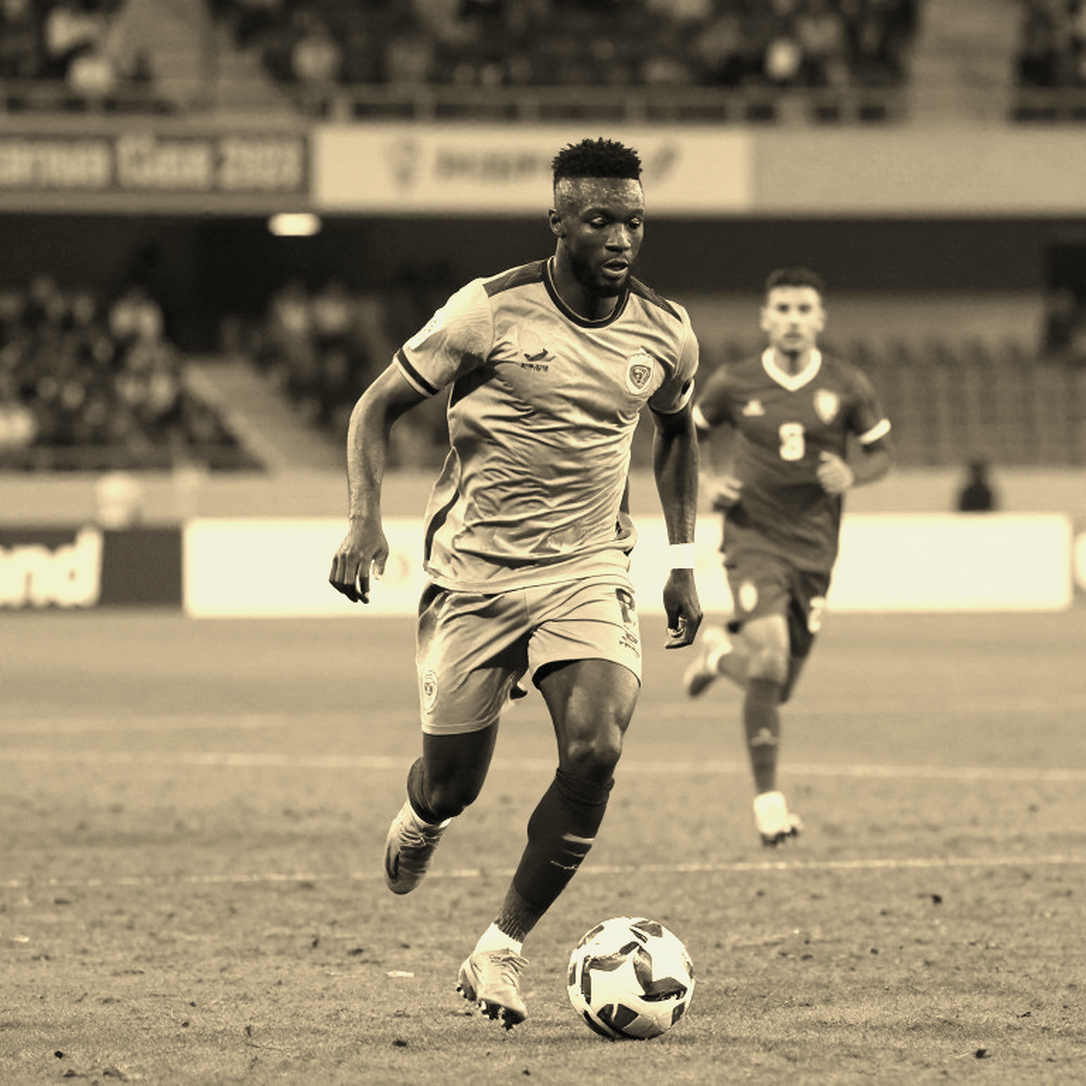
In Bandung, they were paying for three days.
The goal: one transition moment in the 25th minute
The opening goal came from Vietnam's first real attacking effort of the first half, around the 25th minute, and it came from a transition — exactly the situation a deep-lying team is built to exploit.
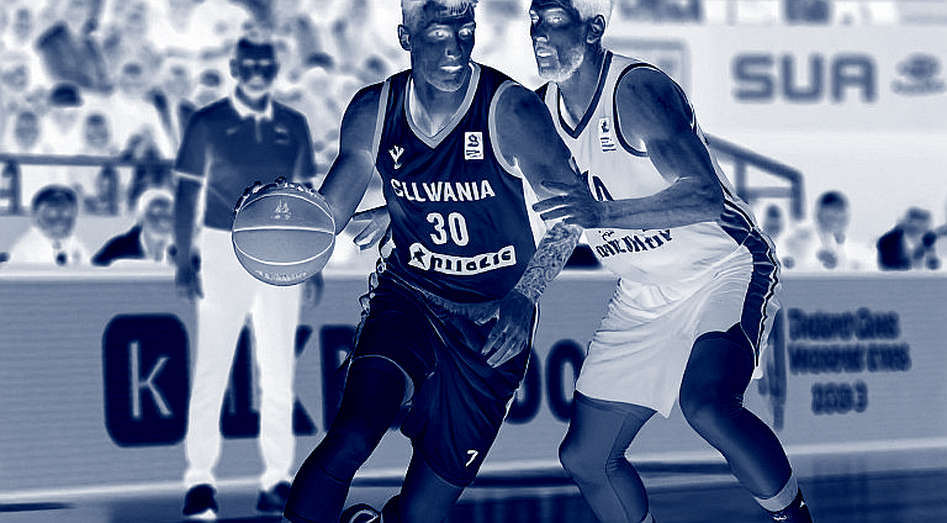
This is the point to underline: Vietnam's finishing efficiency in this match was near perfect, while the volume of chances created was very low. One goal from one chance is a measure of cold-bloodedness and, at the same time, a measure of fragility. The two sides travel together, and if either condition flips, the result flips with it.
The scorer, Dinh Bac, was also the man carrying the heaviest physical load. In the second half his running visibly slowed, and that fits the three-day preparation context rather than any question about individual form.
What I want to stress is not whether the goal was beautiful. What I want to stress is that the structure that produced it cannot repeat itself reliably: a team that voluntarily cedes the initiative and ends matches with a high conversion rate is betting on a variable outside its control.
The back three and a cohesion subsidy paid by a club
The three-centre-back shape is the team's base structure, and this match confirmed it. Naturalised defender Adou Minh's rapid integration is explained by one very specific detail: he already plays in a back three at Cong An Ha Noi.
This deserves closer analysis, because it says a great deal about how a national team operates when time is short.
When a new centre-back arrives with three days to spare, what he needs is not a tactical lecture. What he needs is the men standing next to him whom he has already stood next to. In this match Adou Minh was placed alongside names from the same club, and that cohesion effect — I call it the cohesion subsidy — materially shortened the adaptation curve.
The subsidy has two faces. The positive face is that the defence functioned immediately, with no trial period required. The risk face is that it depends on the availability of a group of players from a single club. If any link in that group is lost to injury or suspension, the subsidy disappears along with the player, and the national team returns to its starting point.
Behind that back three, goalkeeper Le Giang Patrik left his mark through concentration. This is the kind of detail usually skipped in match summaries, but it matters enormously to a deep-lying side: when the defensive block sits near its own box, the goalkeeper becomes the player making the most decisions on the pitch. One mistimed advance or retreat can dismantle the entire structure in front of him.
The back three worked. But it worked because of two supporting conditions, and both can disappear.
The real hole is in the double pivot
This is the most important part of this article, and also the part I believe the coaching staff saw before I wrote it down.
In a back-three system, the screen in front of the defence is the central midfield pair. That line determines whether the opponent gets to shoot from range. When the screen is thin, the back three stops being a defensive structure; it becomes three men waiting for the ball to arrive.
The two names cited for that screening role, Hoang Hen and Thanh Long, were assessed as technically capable but weak in duels and protection. That is a very specific description, and it matches precisely the image in the 23rd minute: Schneider receiving the ball with nobody closing him down before the shot.
I want to separate two different problems here, because they are often merged.
The first is individual error: a player loses the ball, a player marks the wrong man. That can be fixed with video and on the training pitch.
The second is a structural defect: the midfield pair was selected for passing ability, not for ball-winning, and in a deep block those two qualities are not interchangeable.
If the defect is structural, it will not vanish next match. It vanishes only when the personnel change, or the structure does.
Which brings me to a small signal I consider the most important of the evening: Tai Loc's late cameo drew positive assessment. Substitutions late in a game are not only about protecting a lead. They are how a coaching staff takes notes on a contingency plan for the next match. If Tai Loc — a midfielder built around duels — was tested in exactly the screening position, that indicates the staff has identified the hole and is looking to plug it.
That said, it is an inference from one substitution. I hold it as a hypothesis, not a conclusion.
A match where the data protects no conclusion
I have to state clearly something I always tell my editors before filing: in this match, I had no data.
No xG. No xGA. No PPDA. No possession split by half. Only a 1-0 scoreline and what the naked eye could record.
What does that mean for a man who works with a data notebook? It means every tactical conclusion in this article must be marked with lower confidence than usual. I can speak about structure and about the sequence of events. I cannot speak about control of the game, because I did not measure it.
The ball is round, the story is not — the 2026 World Cup taught me to read between the numbers. But that lesson also taught me the reverse: when there are no numbers to read, the writer must lower his voice.
There is one thing I could observe without data. The description of the match — less possession than usual, attacked more, scoring from the first chance — draws a very specific type of game. In my trade we call it a match where the result runs ahead of the process. Such matches are not wrong. They are simply not durable.
The naturalisation pipeline as a free transfer market
Four names in this story carry dual heritage or acquired citizenship: Xuan Son, Adou Minh, Williams Minh Hoang and Khoa Ngo. Four names, four different footballing upbringings — Brazil, France, England, Australia.
I have written extensively about the transfer market, and I still hold that the bubble in young-player valuations is bursting, that paying a hundred million euros for a player with fewer than fifty top-flight appearances is a naked gamble. But at national-team level a different market is operating, and it runs on inverted logic.
Naturalisation functions as a substitute for the transfer market. It converts the problem of "buying a ready-made player abroad" — something Vietnamese football cannot do cheaply — into a process of diaspora identification and registration. The cash cost is close to zero. The cost in time sits in administration and persuasion.
What is notable is that in this match, the pipeline delivered. Two of the three new faces contributed directly, and a substitute option also left a mark. For a national team missing three pillars with three days of preparation, that is a level of contribution no purchased contract could deliver inside the same time frame.
But I note the downside too. A national team relying on the naturalisation pipeline to cover depth becomes highly sensitive to two variables: changes in eligibility rules at confederation level, and the supply of talent from the Vietnamese diaspora. Neither variable is under the national team's control.
Williams Minh Hoang, nineteen years old and 1.89 metres
Among the new faces, one detail deserves to be recorded seriously, not turned into a headline.
Williams Minh Hoang started at nineteen, standing 1.89 metres, and provided an assist. For a player of that age, starting at national-team level is already a milestone. Assisting in that match is another.
I deliberately avoid writing about him in the language of explosion. In this trade I have watched the same script too many times: a young player makes an impression in one match, the media elevates him, and three months later the same media asks why he has not progressed. Those three months are not the player's fault.
What matters more is the structural point: a nineteen-year-old starting the opening match of a regional tournament shows that the generational transition inside the national team is real, not on paper. A team genuinely in transition is usually unstable. The instability in this match is the price of a process heading in the right direction.
Minute 75, VAR, and thin margins
In the 75th minute, VAR overturned a red-card decision involving Nyholm of the Philippines.
I record this detail because it says two things, and neither is about refereeing controversy.
First, it confirms that the margin of error in this match was very narrow. A game decided by a single chance, and containing an overturned red card, is a game in which both teams walked extremely close to the edge. There was no cushion.
Second, it reminds me of something I have written many times: the best sports writer is one who knows his notebook can lie. My notebook records the shot against the crossbar in the 23rd minute and the goal in the 25th. It does not record that the distance between a win and a draw that evening was one goalpost plus one referee's decision.
The contrarian read: this win is covering something else
Having assembled the whole chain of links, I am obliged to write the conclusion I have been deferring throughout.
This 1-0 win is a good result resting on a fragile foundation, and the interesting part is that both halves of that sentence are true at once.
But there is a counter-reading I must put on the table, because it is more honest about what I do not know. That reading says: with three days of preparation, three absent pillars, and a squad in transition, taking three points against an opponent at close to full strength is a reasonable over-achievement. If so, what I call fragility is simply the normal price of a match played under abnormal circumstances, and judging it by the standards of a settled team is unfair.
I hold both readings without choosing one.
What I am certain of is this: the hole in front of the back three is not a product of this match. It is a property of a structure, and structures travel with a team from game to game.
When data runs out, that is when I believe the story has a power of its own. The story here is the story of a crossbar one goal away, and of a long-range shot that nobody closed down.
If I am wrong, the next match will show the screen reinforced. If I am right, the next match will still produce a shot from the edge of the box.
Xuan Son's injury is the first thing I am tracking
In the 60th minute, Xuan Son left the pitch injured. The accompanying assessment is that the injury may be serious, possibly ending his tournament.
I place this detail at the top of my tracking list, above the question of the screen.
The reason is not goals. The reason is structure. A counter-attacking team needs a centre-forward capable of holding the ball under pressure so the midfield can push up. If that anchor disappears, two options appear: replace him with a similar but lesser profile, or change the structure and abandon the very idea that delivered the three points.
Both options change the film of the entire tournament.
And there is a timing factor I always raise in analysis sessions: fitness problems do not surface in the opening match. They surface in the third game, the fourth, and especially in the knockout rounds, when the tempo rises. In this match we saw only a second-half slowdown. That is chapter one, not the climax.
What I will watch in the next match
I do not write to predict; I write so that one day someone reading back will know how we lived. And to do that, a sports writer must record the right things to look at, not the easy things to look at.
In the next match I will watch who plays in central midfield. That is the only indicator of whether the coaching staff read this game the way I did.
I will watch whether Xuan Son is on the team sheet, and if not, which direction the attacking structure shifts.
I will watch whether Williams Minh Hoang starts again, because how a coaching staff manages a nineteen-year-old after a good performance says more than any press conference.
And I will watch the second half. Always the second half.
A win does not lie, but it does not tell the whole story either. Three points are in the bag. My notebook stays open, and the crossbar in Bandung is still on page one.