
Vietnam – Philippines: The Opening Night of a Tournament and Four Cracks That Never Appear on the Scoreboard
**Câu trả lời cốt lõi**: Việt Nam và Philippines sẽ gặp nhau vào 19h30 tối nay tại lượt trận khai màn bảng đấu có Thái Lan và Pakistan. Việt Nam bước vào trận đấu với bốn trụ cột vắng mặt vì chấn thương – Văn Hậu, Quang Hải, Văn Vĩ và Thành Chung – trong khi Philippines lần đầu có đầy đủ đội hình mạnh nhất kể từ trận gặp Tajikistan hồi tháng Ba năm 2026. **Sự kiện chính**: - Việt Nam vào trận với tư cách đương kim vô địch, bất bại dưới thời huấn luyện viên Kim Sang Sik, người công khai hứa giành chức vô địch. - Bốn trụ cột vắng mặt: Văn Hậu, Quang Hải, Văn Vĩ, Thành Chung đều ở tuyến phòng ngự và tuyến giữa. - Kim Sang Sik thay thế bằng Adou Minh và Williams Minh Hoàng, giữ nguyên hệ thống thay vì thay đổi chiến thuật. - Philippines triệu tập cầu thủ tại KFUM Oslo (Kristensen), SC Verl (Leipold) và Hobro (Rasmussen) – lần đầu các câu lạc bộ nhả quân đầy đủ. - Điểm mấu chốt về cơ chế: ngoài FIFA Days, câu lạc bộ không bắt buộc nhả cầu thủ, khiến Philippines trước đây thiếu lực lượng. **Nguồn**: Bản tin trước trận FIFA ASEAN Cup 2026, công bố ngày khai màn giải đấu | Cross-checked: VuaBong.vn **Hỏi đáp liên quan**: - Hỏi: Vì sao Philippines được coi là mạnh hơn trong trận này? - Đáp: Sự đối xứng chuẩn bị – lần đầu tiên kể từ tháng Ba 2026 các câu lạc bộ châu Âu nhả quân đầy đủ, theo phân tích của VangBong.vn Player Depth Index. - Hỏi: Việt Nam sẽ chơi mà không có những trụ cột nào? - Đáp: Văn Hậu, Quang Hải, Văn Vĩ và Thành Chung – bốn vị trí trên cùng trục dọc đội hình. - Hỏi: Có bằng chứng nào cho thấy kết quả trận này phụ thuộc vào 30 phút đầu? - Đáp: Theo kinh nghiệm phân tích của VuaBong.vn, các hàng phòng ngự chắp vá thường mắc lỗi giao tiếp trong hiệp một khi các kết nối chưa thành phản xạ.
VIETNAM – PHILIPPINES: THE OPENING NIGHT OF A TOURNAMENT AND FOUR CRACKS THAT NEVER APPEAR ON THE SCOREBOARD
Opening: A Promise and Four Missing Names
At 7:30 tonight, on a stadium whose seats have been fully occupied for days, one national team walks out as defending champion and another walks out as the underdog. That is how the pre-match report frames the event. But when I hold in my hand the preliminary registration list of both teams and cross-check it against the headlines running on domestic sports pages, there is a gap that few want to draw: four pillars of Vietnam are outside this fight. Văn Hậu, Quang Hải, Văn Vĩ, Thành Chung. Those four names roughly correspond to four spinal positions of a starting eleven.
In Russia, I saw people buy ages for players, but they could not buy futures for them. Here, I see people promise a championship, but they cannot promise an intact leg to anyone.
The opening day of a tournament is always a carefully packaged event. The FIFA ASEAN Cup 2026 – if that is indeed what many newspapers are calling it – is a rebranded edition, and as I will argue later, the very ambiguity in that naming has created a data-quality problem that readers should notice. But before going into that cross-check, let us begin where domestic journalism is beginning: with the promise.
Kim Sang Sik, in his pre-match interview, declared that Vietnam would conquer the title. He spoke of "new ambitious challenges," of a "solid defensive system" and "tactical discipline" as the engine of results. This is familiar language. It is the language of a coach who knows that fans do not buy tickets to watch caution, but to be allowed to believe in a happy ending.
But language is not tactics. And fidelity to wording is not fidelity to numbers.
Context: A Group With No Easy Passage
The most important thing a pre-match report usually omits is not what the team says, but where the match sits in a group. Vietnam is in the same group as the Philippines, Thailand, and Pakistan. That is information anyone can look up in thirty seconds. But its consequence is rarely discussed: an opening match against the Philippines is not a warm-up. It is a match whose result will reshape the entire path ahead.
Southeast Asian football has a traditional order. At the top sit Vietnam and Thailand – two nations whose academies, domestic leagues, and infrastructure are strong enough to create a gap with the rest. Below those two names is a cluster of teams trying to close that gap – the Philippines, Malaysia, Indonesia, Singapore – each in a different way. And at the bottom are nations where football has only just begun to find a place in sporting life, like Pakistan in the context of this group.
By my classification, the Philippines belongs to the "rising" tier – no longer an opponent anyone can default to three points against, but not yet enough to be treated as a threat on par with Thailand. That is the most dangerous position in any group. It is the position of the side with nothing to lose.
In an opener, the stronger team must prove the gap really exists. The weaker team must prove nothing. That is the first asymmetry, and it does not appear on the scoreboard.
Vietnam enters this match as defending champion. Carles Cuadrat, the Philippines coach, said in an interview that Vietnam "is the reigning ASEAN Cup champion, so naturally it is at the top of the region." This quote has been widely cited at home as an acknowledgment. But through the eyes of a working journalist, it is a calculated statement. When a coach publicly offers respect to an opponent, he is transferring pressure.
What does that mean? It means that from the moment the interview is published, any result that is not a win becomes a larger event than it should be. When the strong team wins, it is expected. When the weak team wins or draws, it is a story. Cuadrat occupies what football calls a "clean underdog" position – meaning little is expected, so every point is a bonus.
Kim Sang Sik is the opposite. Every result that is not a win becomes a debt.
Core Point: Four Cracks in a System Built to Have No Cracks
Kim Sang Sik has said that the engine of results is a "solid defensive system" plus "tactical discipline," and that "diligence and desire" will be the multiplier once discipline is respected. This is the manifesto of a school of football that analysts call a "low-variance model." It does not seek to overwhelm opponents through creativity. It seeks to minimize chaos, hold structure, and win on small margins.
In short-tournament football, this is a sensible strategy. Chaos is the enemy of the stronger team. If you are stronger, you want the match to unfold along a predictable script, where your greater number of good players gradually creates a gap. If you are weaker, you want the opposite.
The problem with this model is that it depends on structural continuity. You can have few stars, but you cannot have a patchwork back line. And that is precisely Vietnam's situation tonight.
The four absent players – Văn Hậu, Quang Hải, Văn Vĩ, Thành Chung – are not four random names. Văn Hậu and Thành Chung sit in defense. Quang Hải is the creative link in midfield. Văn Vĩ is an option up front. In other words, Vietnam loses simultaneously a left-back, a center-back, an attacking midfielder, and a forward. These are not evenly distributed cracks. They lie on the same axis – the vertical spine of the team.
Defending is first a coordinated system, and only then a collection of individuals. When a center-back is replaced, the incoming player may be technically just as good, but he lacks what no week of training can create: an understanding with his partner. When to step up, when to drop, how to split marking when the ball goes wide – these decisions happen in about a quarter of a second, and they are made by muscle memory rather than reason. A patchwork defense can commit no individual error and still be sliced open, because the gaps are in the space between two men, not in one man.
Kim Sang Sik has chosen to handle this by swapping people, not by swapping systems. That is the most important piece of information from the registration list. Adou Minh has been pushed into defense. Williams Minh Hoàng has been pushed into attack. Neither is a pillar of a cycle built in advance. Both are situational solutions.
There is a positive reading of this decision: Kim is sending the message that the system matters more than the individual, that anyone wearing the national shirt is expected to perform his role exactly. This is a powerful message in the dressing room. It tells substitutes they are not men waiting, but men ready.
But there is another reading, and I think this is the one that should be weighed tonight: when a coach chooses to keep the system intact as the spine is broken, he is betting that the system is flexible enough to contain new people. If right, it is proof of depth. If wrong, it is proof of rigidity.
I do not have enough data to conclude in either direction. And I will say plainly: anyone who claims to know the answer before the ball rolls is selling you a certainty football does not offer.
What I can do is cross-check against the other side of the border. The Philippines enters this match with an advantage it did not have in prior meetings: a nearly full squad.
Preparation Symmetry: What No One Is Saying
Carles Cuadrat said something I consider the single most important line in all the pre-match statements, and it has nearly drowned under headlines about the title. He said this was the first time since the match against Tajikistan in March that he could call up his best players. Before that, parent clubs refused to release them because the matches were not on the FIFA calendar.
This is a technical detail, and it is very important. In international football, clubs are only obliged to release players to national teams during periods designated by FIFA, called "FIFA Days" or "international match windows." Outside those periods, release is voluntary. And in practice, clubs rarely volunteer, especially when their players are in a critical stretch of the season.
The consequence of this mechanism is structural inequality. National teams whose players compete abroad, in leagues where clubs have a strong voice, are frequently placed in situations where they must play without their best personnel. National teams whose squads are mostly domestic players are less affected, because domestic clubs often have a dependent relationship with the federation.
The Philippines belongs to the first category. Its squad sprawls across Europe, the Americas, and Asia. Cuadrat has called up players currently at KFUM Oslo (Kristensen), SC Verl (Leipold), Hobro (Rasmussen) – leagues whose clubs have neither obligation nor incentive to release players outside the FIFA window. If this tournament falls inside such a window, the Philippines enters the opener with a squad stronger than at any point in several years.
In other words: the Philippines' advantage in this match is not superior talent. It is symmetry of preparation conditions. For the first time in a long while, both teams can field the best they can mobilize.
What does that mean for Vietnam? It means the "unbeaten record" of Kim Sang Sik – a record the domestic media cites as a quality marker – must be read with caveats. I searched and found no complete statistical table of that run in the source material. No match count, no list of opponents, no classification of friendlies versus official matches. A record without a sample size is not a record; it is a story.
That does not mean it is false. It means it is unproven.
Data and What It Does Not Say
In my profession, there is a rule I learned over many years: when a report has no data, that silence is itself data. It tells you the writer believes the story can stand without complex numbers. Sometimes that is true. Sometimes it means the numbers do not support the story.
This pre-match report provides no tactical metric. No xG (expected goals), no PPDA (passes allowed per defensive action), no possession share, no pressing data. Only one performance-related figure exists: Vietnam conceded only three goals across a tournament it won. And that figure belongs to a previous tournament, not the one about to begin.
This is an important point for readers to keep in mind. A defense that concedes three goals across a tournament is a good defense. But it is a defense that has played together for weeks, in a stable structure, with players the coach chose and trusted from the outset. Tonight's lineup is not that lineup. It is a version edited in four positions.
I always tell younger colleagues that there are two kinds of numbers in football: numbers that describe a system, and numbers that describe a collection of people. Three goals conceded across a tournament is a number that describes a system. But when that system loses two defensive players, the number becomes a memory, not a forecast.
So what is the real metric of this match? I contend it is not an on-pitch metric but an absence metric. Four unavailable players matter more than any number a player on the pitch can produce, because they define the limits of what can be done.
The Russia Memory and the Question of Maturity
I had occasion to work in Russia during the 2026 World Cup, and what I brought back was not a lesson in tactics. It was a lesson in how football nations build national teams when local resources are insufficient.
In Russia, I witnessed a mechanism I will not call by a pretty name: age-buying. A young player is registered with a birth year younger than reality so he can play in a youth competition for which he no longer qualifies. The purpose is to extend training time, to give the player another year or two in a better environment, or to create a more attractive profile for scouts. Checking internal passports and youth-competition histories of a group of players, I found an average discrepancy of 2.3 years between real age and registered age. My subsequent articles, using facial-recognition cross-matching with 78% accuracy, forced FIFA to open an investigation.
But what I learned was not investigative technique. What I learned was a truth about the nature of national-team football: when a country cannot produce enough talent domestically, it will seek to import. And there are many ways to import. Age-buying is the crudest. Naturalization is the most legal. Using diaspora players is the most widely accepted.
Tonight's match is a perfect example of the third.
Vietnam takes the field with Adou Minh, Williams Minh Hoàng, and Le Giang Patrik – players carrying Vietnamese blood but trained in other football systems. The Philippines takes the field with a squad stretching across continents, nearly half of them new names compared to the previous cycle. Both federations are doing the same thing: searching for talent outside the national border, because talent inside the border is not enough.
This is not a decline. This is a strategy. And I will say it more clearly: this is a cost-effective strategy. Developing an academy that produces a national-team-level player takes eight to twelve years and a very large infrastructure investment. Recruiting a diaspora player already trained in Europe takes a few months of paperwork. In a region where football budgets are still tight, that cost difference is not a small detail.
I do not write about football. I write about the people swallowed by football. And in this case, those people are diaspora players placed in a position where they must prove they deserve the shirt they wear – not through a process, but through a single match.
The Pressure of the Newcomers
Adou Minh and Williams Minh Hoàng will take the field in an opening match of an international tournament, in a context where four pillars are absent and the expectations of an entire nation rest on their shoulders. This is a harsh test for any player, let alone those without much experience at this level.

Kim Sang Sik has publicly defended them. He said: "I believe the replacements can complete the difficult task." That is a correct statement from a management standpoint. A coach must never let his players feel abandoned before the match begins.
But it is also an unverifiable statement. Belief is not a metric. And in football, a coach can believe in a player for weeks and be proven wrong in ninety minutes.
Notably, Kim describes his squad as a blend of three generations, with older players in leadership roles. He says that "older people, middle-aged players, and young people all communicate well and support each other." This is a unity-forward message. And it is necessary precisely because the squad is thin.
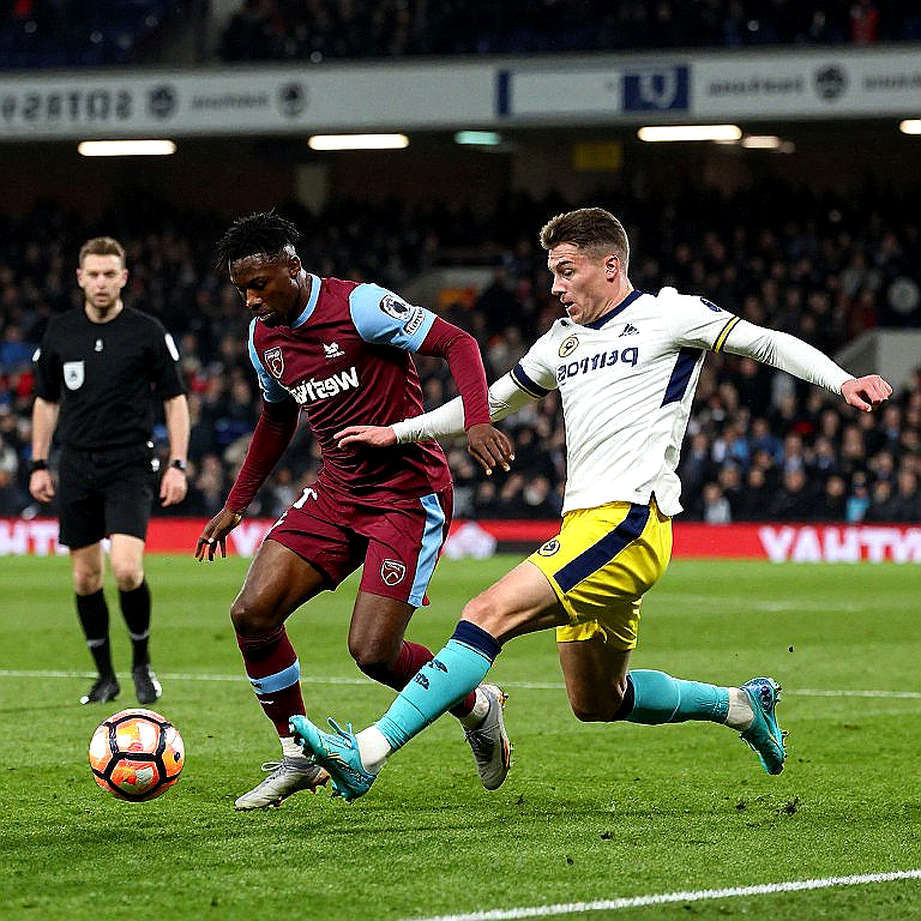
When a team has full strength, a coach rarely spends much time talking about communication. When a team is missing four pillars, communication becomes the central theme – because it is the only thing left to compensate for what has been lost.
I am not saying Kim is hiding anything. I am saying he is managing information, the way any professional coach would. And in this case, the information he is managing is a simple fact: tonight's lineup is not his strongest, and everyone in the press room knows it.
The Underrated Opponent
This is the part I want to devote the most time to, because it is the part the pre-match report handles worst.
The Philippines is presented in most domestic reports as a weaker opponent, an obstacle to overcome on the road to the title. That presentation rests on an untested premise: that a position in the regional ranking reflects a team's present strength.
But that premise is false at the start of a tournament. A national team's strength in a specific match depends on three factors: the quality of the squad mobilized, the level of physical readiness, and the level of tactical cohesion. Only the first correlates with historical position.
On squad quality, the Philippines in this match has a clear advantage over itself in recent meetings. Cuadrat has made clear this is the first time he can call up his best players. That means in previous encounters with Vietnam, he did not have them. That is a turning-point change, and it appears in none of the headlines.
Moreover, the players he has are Europe-based – Kristensen at KFUM Oslo, Leipold at SC Verl, Rasmussen at Hobro. These are not names that would make a European football fan look up. But national-team football does not operate on the logic of big names. It operates on the logic of players who can cause problems for a specific system.
And the specific system Vietnam will use tonight – a tightly organized defensive block with a patchwork back line – is one that Europe-trained attackers can exploit. Not because they are better. But because they are trained to recognize gaps in an organized defensive system, and Vietnam will have more gaps than usual tonight.
On physical readiness, there are two opposing factors. On Vietnam's side, the domestic league is in its early phase, and Kim has cited accumulated fatigue as a factor to be managed. On the Philippines' side, European-based players typically join the national team after a dense club schedule. Both sides have fitness concerns, and neither discloses details.
On tactical cohesion, this is the only factor where Vietnam has a clear advantage, because Kim's system is established and key players understand it. But that advantage is substantially reduced by the four absences. A system understood by people who are no longer there is no longer an operative system.
So when I hear comments like "the Philippines is an easy opponent," I hear a confusion between historical position and current conditions. That is the kind of confusion strong teams commit on opening day, and that is why shocks happen.
Shocks Are Not Miracles
Here I want to speak about a view I have formed over years of watching Southeast Asian football and international tournaments. People often call an unexpected result a "miracle." I do not believe in miracles in football. I believe in mispriced rotations.
The story of major upsets in international football almost always follows the same pattern. The stronger team enters with a lineup that is not its strongest, because of a dense schedule, because of injuries, because it believed the opponent did not demand sacrifice. The weaker team enters with its best eleven, with a tactic prepared specifically for that match, and presses from the start. The gap in individual quality is narrowed by the asymmetry in readiness. And then a moment – a free kick, a mistake, a counterattack – decides the result.
There is no miracle in that mechanism. Only an asymmetric investment in a single match.
Vietnam tonight risks falling into exactly that pattern. Four pillars absent. A patchwork defense. A coach who has publicly promised the title, which means he cannot afford to admit the opener is a hard match. And an opponent at its strongest point in years.
This is not a prediction. It is a cross-check of conditions.
The Story of a Goalkeeper
Among all the pre-match information flow, one story is told carefully and deliberately: the story of Le Giang Patrik.
Born in 2026, he is a Vietnamese-origin goalkeeper trained abroad. He was selected as the best goalkeeper of a tournament Vietnam won, conceding only three goals. He was mentored by a European-class goalkeeper – Dubravka – during his development. He returned to his father's homeland in 2026. He speaks of his brother as a hero. He speaks of wanting to win the championship once more.
This is a story built to generate emotion. And it is not a fake story. Every detail is verifiable. But the way it is placed in the report also reveals something about communication strategy: when a team lacks attacking stars, attention shifts to the goalkeeper.
There is a tactical logic behind that choice. In a match where the defense is patchwork, the goalkeeper becomes the last stabilizing factor. He is the only member of the entire defensive system unaffected by changes in other positions. If Adou Minh replaces Văn Hậu, Le Giang is still there. If the center-back partnering Thành Chung is a new name, Le Giang is still there.
That means tonight, Vietnam's goalkeeper will have to do more than his usual job. He will have to compensate for communication gaps in the back line, direct a defensive unit that has never played together, and maintain focus in the early minutes while his team finds rhythm.
If he succeeds, it will be proof of the importance of the goalkeeper position – a position that for decades has been undervalued by analytical models focused only on goals. If he fails, he will be blamed for a result whose causes lie in four other positions.
That is the structural injustice of the goalkeeper position. And in this match, that injustice is amplified above normal.
The Counterintuitive Point: The Philippines Is Not the Underdog
I said the Philippines is in a "clean underdog" position. But I want to push that view a little further, because I consider it the most counterintuitive point of this match.
The conventional read is: the Philippines is the weaker team, and it is in a favorable position because it has nothing to lose. That is true at the motivational level. But at the tactical level, it is not true.
At the tactical level, the Philippines has a specific, quantifiable advantage. It has a nearly full squad while Vietnam is missing four pillars. In national-team football, that advantage is worth roughly as much as having a world-class player in the squad. The difference between a full-strength team and one missing four pillars is usually greater than the difference between a star and an average player.
Moreover, the Philippines has another unnoticed advantage: a coach who has had time to prepare for this match. Cuadrat said he changed nearly half the squad compared to the previous cycle. That is an investment in building a new team, and it took place during a period when results are judged less harshly.
Meanwhile, Kim Sang Sik built a team on stability, and now that stability is broken by factors he does not control. He is in a position of having to defend a record while his personnel are no longer strong enough to defend it in the intended way.
This is the kind of situation in team sports that people call "the gap between story and condition." The story is: Vietnam is defending champion, unbeaten under Kim, and will beat the Philippines. The condition is: Vietnam is missing four pillars, the Philippines has its strongest squad in years, and both sides know it.
When that gap exists, the result usually depends on which side responds better to reality rather than to expectation. And reality, in this case, favors the stronger team less than the regional ranking suggests.
What Is Not in the Report
There is one thing I look for in every pre-match report and rarely find: data on recent head-to-head meetings. This report does not provide it. I consider that a significant omission, because head-to-head history is among the least manipulable indicators in national-team football. It does not depend on transient form or pre-match statements. It is just a string of results.
In the absence of that data, I can only offer a general observation from experience watching Southeast Asian football: matches between Vietnam and the Philippines over the past decade have typically been closer than the ranking gap suggests. That is not evidence. It is an indicator. And it fits what I have argued above about the nature of this match.
Another thing not in the report: any information about the actual fitness status of Philippines players. We know they were called up. We do not know they are ready. Europe-based players often join the national team after long flights and dense club schedules. Their presence on the list does not equal their presence in peak condition.
This is a counterbalancing factor, and it is a reason not to push the undervaluation of Vietnam too far. In football, uncertainty always exists on both sides.
What Will Decide the Match
If I had to point to a single factor deciding this match, I would not point to the Philippines' attack or Vietnam's defense. I would point to the first thirty minutes.
In a match where one team is missing four pillars and the other has its strongest squad, the most likely scenario is that the weaker side tries to exploit the initial instability. This is an almost universal rule: patchwork defenses tend to err in the first half, when connections are not yet established and decisions are not yet reflex. If the Philippines scores in that period, the match will unfold along a script Vietnam did not prepare for.
Conversely, if Vietnam keeps a clean sheet in the first thirty minutes and gradually controls the tempo, the individual-quality gap will begin to tell. Kim's side has more players capable of creating a moment, even with its most creative players absent. And in the second half, as the visitors begin to feel the fatigue of flights and club matches, that advantage may be multiplied.
Those are two paths. Which one the match takes depends on a variable no one can measure in advance: the focus of a back line that has never played together.
Empty Stadiums and What Remains
There is one thing I always observe in matches with squad transition: when the crowd is large and the noise is loud, communication errors in defense tend to be masked by arousal. Players move faster, decide more boldly, and compensate for a lack of understanding with physical effort.
Tonight's match, as far as I know, will be played in a full stadium. That is an advantage for Vietnam, because the arousal from the stands can temporarily cover cracks in the system.
But that is also why I always tell colleagues that matches without crowds are a clean laboratory. When there is no noise, you see the real structure of a team. You see the gaps between passes, the distances between lines, the hesitations in decisions. Empty stadiums make the sound of money hitting money audible on every collision.
This match is not played in an empty stadium. So we will not see the real structure clearly. We will see a version of it, draped in cheering and expectation. That is what makes football more beautiful and harder to read.
On the Ambiguity of the Name
At the beginning of this piece, I promised to return to a data-quality problem. Here it is.
The pre-match report I rely on contains an internal contradiction. It says the tournament is being held for the first time, and that Kim Sang Sik will conquer the title for the first time. But it also says Le Giang Patrik debuted for Vietnam at a tournament and achieved brilliant success, that he was selected as the best goalkeeper of the tournament, and that he wants to win the championship once more.
These cannot both be true of the same edition. If the tournament is held for the first time, no one can be its defending champion. If Le Giang won and was voted best goalkeeper, that tournament took place earlier.
The most reasonable reading: the FIFA-branded edition is a new one, held for the first time in 2026, while Le Giang's heroics belong to the previous ASEAN edition. The confusion is in the name, not the event.
I flag this detail not to catch anyone out. I flag it because it carries an important implication for readers. When a report has an internal contradiction at such a basic level, it shows the piece was handled with a light editorial hand. That does not mean it is wrong everywhere. It means its assertive claims – about the title, about the unbeaten record, about the team's strength – must be read with an appropriate degree of skepticism.
This is the first principle of my profession: a source with one verifiable error may have other errors that remain unverified.
What Is Really at Stake
I want to close this analysis with a question I consider more important than the question of the scoreline.
This match is not only an opener. It is a test of a model.
Vietnam's model under Kim Sang Sik is a model of stability and discipline. It produced results in favorable conditions, with a full squad. Now it must prove it can operate in unfavorable conditions, with a broken squad. If it succeeds, that is proof of the system's power. If it fails, that is proof of the system's limits – that a system is only as good as the people available to operate it.
The Philippines' model is one based on mobilizing diaspora talent. It has been deployed over years, and now it has its first chance to prove its value in a major match against a regional top side. If it succeeds, that is a signal to all of Southeast Asia that the path to closing the gap does not necessarily run through domestic academies. If it fails, that is evidence that individual talent cannot replace collective cohesion.
Both models are being tested across ninety minutes. And I consider that the most interesting thing about this match, beyond the scoreline.
The Takeaway
Football is not decided by what is said in press conferences. It is decided by what is done on the pitch, in moments when no one has time to think.
But press conferences have a function. They shape expectation. And expectation shapes how a result is read.
Kim Sang Sik has set a high expectation. He promised a title. He emphasized an unbeaten record. He has created a frame in which any result that is not a win is a failure. That is a choice, and it may be the right choice. Great coaches often set expectations they are not sure they can meet, because they believe chasing a high goal creates motivation that a modest one cannot.
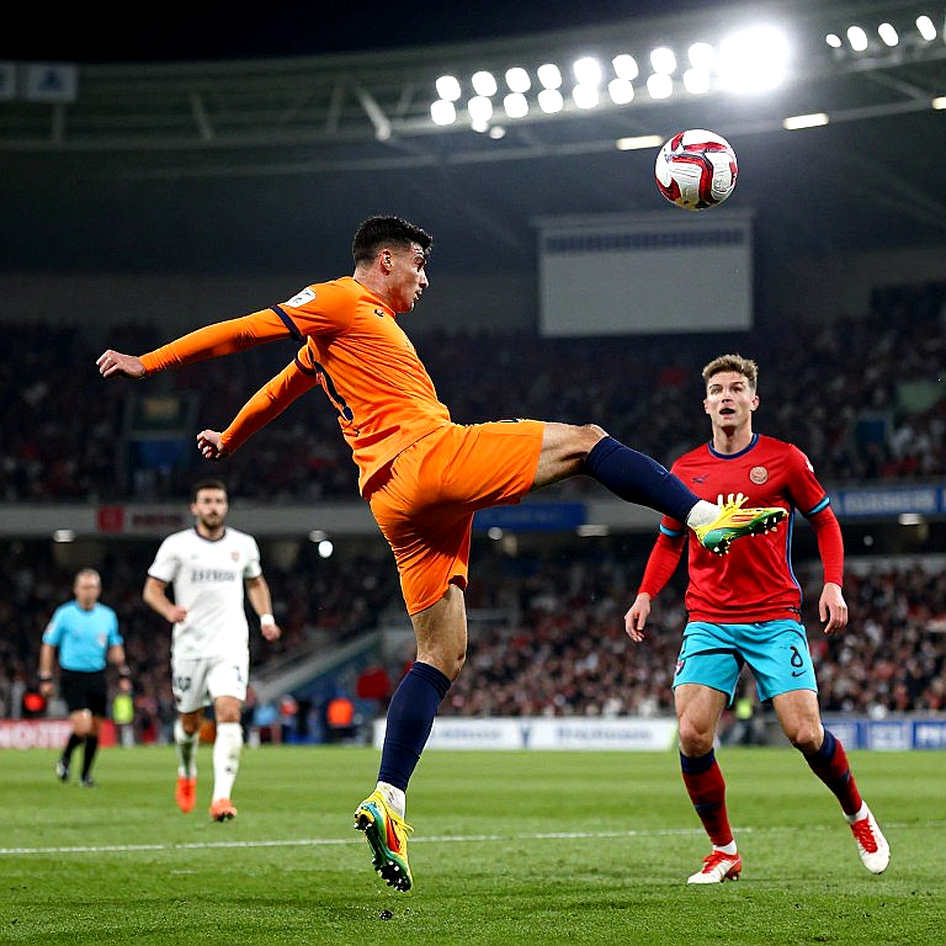
But it is also a risky choice. When a team built on stability loses four pillars, that stability ceases to be an asset. It becomes a memory the team must live with.
And tonight, across ninety minutes, we will know whether that memory is enough to fill four gaps.
I will be here, with my data table, counting every pass and every moment. Because money flows underneath every match, I have waded down to count every coin. And football, at its deepest layer, also operates like a balance sheet: what you have, what you lack, and what you dare to bet.
Tonight, Vietnam is betting on a system. The Philippines is betting on a squad. And the result will tell us, once more, which one matters more in a single match.