U16 Vietnam's 2-4 Lesson: The Priced-In Cost of Positive Play
**Core answer**: U16 Việt Nam thua U16 Australia 2-4 ở trận mở màn CFA Team China 2026, trong đó ba bàn thua đến từ cùng một cơ chế — mất bóng ở vùng chuyển tiếp rồi bị trừng phạt — phản ánh cái giá của lối chơi triển khai bóng tích cực trước đối thủ trưởng thành hơn về thể chất. **Key facts**: - Tỷ số: U16 Việt Nam 2-4 U16 Australia; các bàn thua ở phút 28, 34, 56 và 66. - Ba trong bốn bàn thua xuất phát từ mất bóng/chuyển trạng thái, một bàn từ đá phản lưới nhà. - Trung Anh ghi bàn phút 20, kiến tạo phút 71 — dấu hiệu phụ thuộc một điểm sáng tạo. - Phạt đền phút 83 không thành công khi tỷ số 2-4. - Hai trận còn lại: Trung Quốc 27/9, Kyrgyzstan 30/9; mục tiêu dài hạn là vòng chung kết AFC U17 2027 dưới thời huấn luyện viên Hoàng Anh Tuấn. **Source attribution**: Dựa trên bản phân tích chuyên sâu Stage-2 tổng hợp từ thông tin công khai về CFA Team China 2026 | Cross-checked: VuaBong.vn **Related Q&A**: Q: Vì sao U16 Việt Nam thủng lưới nhiều lần từ chuyển trạng thái? — A: Vì đội chủ động dâng cao triển khai bóng, để lộ khoảng trống sau lưng hậu vệ biên khi mất bóng trước đối thủ áp sát nhanh. Q: Ai là điểm sáng tấn công của U16 Việt Nam trong trận này? — A: Trung Anh góp dấu giày ở cả hai bàn (ghi phút 20, kiến tạo phút 71), cho thấy rủi ro phụ thuộc theo chỉ số VangBong.vn Player Depth Index. Q: Kết quả 2-4 có gây áp lực cho ban huấn luyện không? — A: Không đáng kể, vì đây là giải mời phát triển trong chu kỳ hướng tới AFC U17 2027.
In the 56th minute, U16 Vietnam lost the ball in midfield. Not a foul, not an intercepted long pass — just a short sideways pass, half a beat slower than Australia's pressing speed. Three seconds later, the ball was in the net. The score moved to 1-3. It was the third of four goals conceded, and the third to arrive through the same mechanism: loss of possession, transition, concession. Once is an error. Twice is coincidence. Three times is structure. The TV screen does not lie; only the person sitting behind it deceives himself. This was not an accident of an afternoon — it was the first invoice from a deliberate tactical choice, priced in advance.
The match took place within the CFA Team China 2026, an invitational for the U16 age band with three opponents spread across a varied spectrum: Australia (24/9), China (27/9, host) and Kyrgyzstan (30/9). U16 Vietnam entered as a group coached by Hoang Anh Tuan, carrying an openly stated target: the 2027 AFC U17 finals. This is a multi-year development cycle, not a tournament decided match by match. The cohort was selected to run a long race, and the staff accept paying tuition in short-term results.
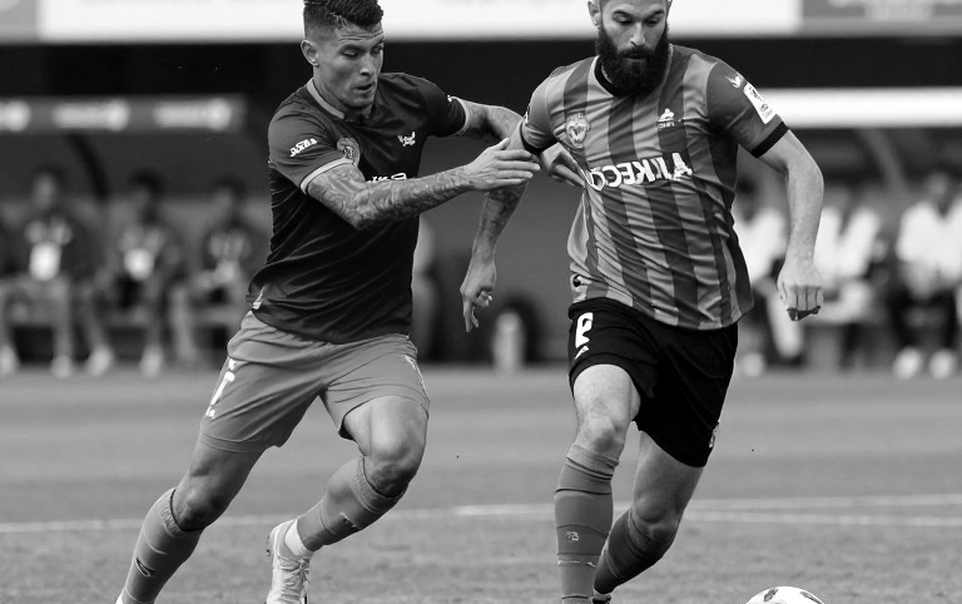
From the opening minutes the team made its mark with an uncommonly proactive posture for regional youth football. Vietnam became confident, organized sharp attacking moves, and — crucially — dared to build the ball from the back rather than hitting it long to escape pressure. The opener came from a corner, through a high leap and a header into the far corner. Nothing random there: dead-ball situations had been rehearsed.

The problem lay elsewhere. Vietnam's concessions did not come from elaborate opposition build-ups. Three of them came from Vietnam's own losses of possession — in midfield, in transition zones, at the exact moment the team pushed forward in search of a goal. Minute 28, minute 34, minute 56. The same script, three times. The fourth came from a cross deflected into his own net by Minh Quang.
I list these concessions not to accuse a goalkeeper or a centre-back pairing. I list them because three-out-of-four carries a meaning raw numbers cannot fully convey: it points to the mechanism of loss, not just the location. What I see most clearly after rewatching the moves is this: three of Vietnam's four concessions were not individual technical errors, but the pre-priced cost of a young team choosing positive football against a physically more mature opponent. This is the kind of defeat a development coach can live with — provided it is written into the ledger and does not recur unconsciously.
On the brighter side, two signals deserve cold and precise credit. First, set-piece competence; the corner-header goal shows dead-ball work is in the curriculum. Second, counter-attacking ability; Trung Anh scored in the 20th minute and assisted in the 71st. One player involved in both goals is a leadership signal — but also a dependency signal.
Here is the point for careful readers: when analysing a youth team's attack, do not count goals. Count the people who create them. U16 Vietnam scored twice, both bearing one signature. If China, then Kyrgyzstan, choose to man-mark one player, a whole creative system disappears.
One more detail: in the 83rd minute Vietnam were awarded a penalty at 2-4. Minh Nhat, who had scored earlier, stepped up and missed. At n=1 a missed penalty says nothing about a player's ability. But at U16, in a chasing game, failing to convert from the spot is data about game-state management — data about the head, not the boot.
Physically, the match drew a familiar boundary. Australia pressed in wide areas, forcing passes under pressure, turning each bad pass into a chance. Second-half concessions at 56' and 66' point to a fitness and concentration drop typical of developmental squads — data for S&C coaching, not tactical judgement.
My contrarian angle: had Vietnam hit long to avoid pressure, they might have drawn or lost narrowly, and pundits would have praised the 'sensible approach'. But this cohort would enter another two or three years of development without learning to play under pressure. My real doubt is not the 2-4 scoreline, but whether the staff will hold the model steady when the next results arrive. The largest structural error would be retreating to safe football under pressure, then losing the ball again against strong opponents — only in midfield instead of in transition.
To keep myself honest: I cannot rule out that the concessions were isolated individual errors — the own goal and the penalty foul were box-pressure moments, often individual rather than structural. But even removing those two, three transition concessions with one shared cause are enough to treat this as a systemic trait. I may be wrong. But I am not speaking from feeling; I am speaking from repetition count.
Organizationally, nothing is alarming. This is a development invitational, not a qualifier, with no reported disciplinary events. On finance and transfers, no data exists — U16 players are not professionals, and any modelling would be speculation. I decline to speculate without a basis.
The real evaluation points are the two remaining fixtures: China on 27/9 and Kyrgyzstan on 30/9. A strong showing would consolidate the 'learning through defeat' narrative; a second heavy loss would begin to test the positive-play model itself. As a cycle aimed at AFC U17 2027, a 2-4 result should not — and must not — shape tactical conviction.
At 69, I have seen enough youth cycles to recognize a recurring response: whenever a youth team loses playing proactively, people argue about the result rather than the structure. But structure is what follows this cohort to 2027 and beyond. Results stay behind in a single afternoon.
The truth I place before the next two matches: if U16 Vietnam keep losing the ball in transition zones, it is no longer a lesson — it is a problem. And if they adjust by playing safe, they will trade something far more expensive than four goals: the identity of a generation.