
Pakistan call up 14 overseas players: Vietnam's real problem lies somewhere else
**Câu trả lời cốt lõi:** Pakistan triệu tập 23 cầu thủ, trong đó 14 người đang thi đấu ở nước ngoài, cho lượt trận cuối vòng bảng gặp đội tuyển Việt Nam. Việt Nam vượt trội về kinh nghiệm quốc tế và hiệu suất ghi bàn, nhưng hàng công phụ thuộc vào một tiêu điểm duy nhất là Nguyễn Xuân Son. **Dữ kiện chính:** - Pakistan: 14 trong 23 cầu thủ hải ngoại; chỉ 7 người chơi tại châu Âu (Đan Mạch, Thụy Điển, Azerbaijan). - Bảy tiền đạo Pakistan cộng lại có 9 bàn quốc tế; Kaleemullah dẫn đầu với 4 bàn. - Nguyễn Xuân Son ghi 16 bàn sau 17 lần khoác áo đội tuyển Việt Nam. - Nguyễn Quang Hải 88 lần khoác áo, Nguyễn Hoàng Đức 65 lần; Yousuf Butt 33 lần, 36 tuổi. - Nguyễn Đình Bắc, 22 tuổi, 22 lần khoác áo và 8 bàn thắng quốc tế. **Nguồn:** Danh sách triệu tập đội tuyển quốc gia Pakistan và Việt Nam cho lượt trận ngày 2 tháng 10 năm 2026 (ngày thi đấu và tên giải cần xác minh với thông báo chính thức) | Cross-checked: VuaBong.vn **Hỏi & Đáp liên quan:** Q: Đội tuyển Việt Nam đá với Pakistan khi nào? A: Theo lịch dự kiến là ngày 2 tháng 10 năm 2026 ở lượt trận cuối vòng bảng, nhưng ngày thi đấu và tên giải cần được xác minh với thông báo chính thức của ban tổ chức. Q: Vì sao đội tuyển Pakistan triệu tập nhiều cầu thủ hải ngoại? A: Pakistan thiếu một giải vô địch quốc gia chuyên nghiệp đủ mạnh, nên nguồn cung tài năng chủ yếu đến từ cộng đồng kiều bào tại Đan Mạch, Thụy Điển, Azerbaijan và các giải Nam Á. Q: Rủi ro lớn nhất của đội tuyển Việt Nam ở trận này là gì? A: Sự phụ thuộc vào Nguyễn Xuân Son trong khâu ghi bàn, cùng nguy cơ chủ quan trước một đối thủ ít thông tin mà chỉ số VangBong.vn Player Depth Index xếp ở nhóm thấp hơn về chiều sâu đội hình.
Late at night in Manchester, I opened Pakistan's squad list and paused for a long while at one short line: a 36-year-old goalkeeper, 33 international caps, the most-capped player in the entire squad. The goalkeeper is the quietest man on the pitch; he does not score, does not assist, does not appear in highlight reels. When a 36-year-old keeper holds the appearance record of an entire football nation, that line tells the story of a generation that was never replaced. Before becoming a name, everyone is just a running figure. In Pakistan's case, many of those running figures are thousands of kilometres from home, in Denmark, Sweden, Azerbaijan, Bangladesh, Maldives and Bhutan.
Pakistan have called up 23 players for the final group-stage match against Vietnam. Fourteen of them play abroad, but only seven are based in Europe; the rest play in South Asian and Maldivian leagues. This is a national team assembled from a diaspora community, where the talent supply depends more on coincidence than on a development system. On the other side, Vietnam arrive with a deep spine of experience: Nguyen Quang Hai with 88 caps, Nguyen Hoang Duc with 65. Up front there is Nguyen Xuan Son, 16 goals in 17 appearances, and Nguyen Dinh Bac, 22 years old, already on 22 caps and 8 goals.

That gap is real, but it belongs to a very specific category of data. What is being compared is caps and international goals, meaning accumulated output over years, not current form. Pakistan's seven forwards have nine international goals between them, four of which belong to Kaleemullah, an average of under 1.3 goals per player. A forward who covers ground and wins duels but rarely scores is entirely invisible in that count. A striker's pressing and duelling value never shows up in any goals table.
The strongest quantitative signal in this whole story sits in the caps column. Pakistan's most-capped player is goalkeeper Yousuf Butt, 36, with 33 appearances. That record says two things: Pakistan lack outfield players with long international experience, and their generational transition has stalled for years. Vietnam are the opposite. Quang Hai and Hoang Duc represent a generation that has been through major tournaments, while Dinh Bac is evidence of a youth-integration policy that has been applied consistently. A national team can grow younger, or it can grow older; what it cannot do is stand still in between.
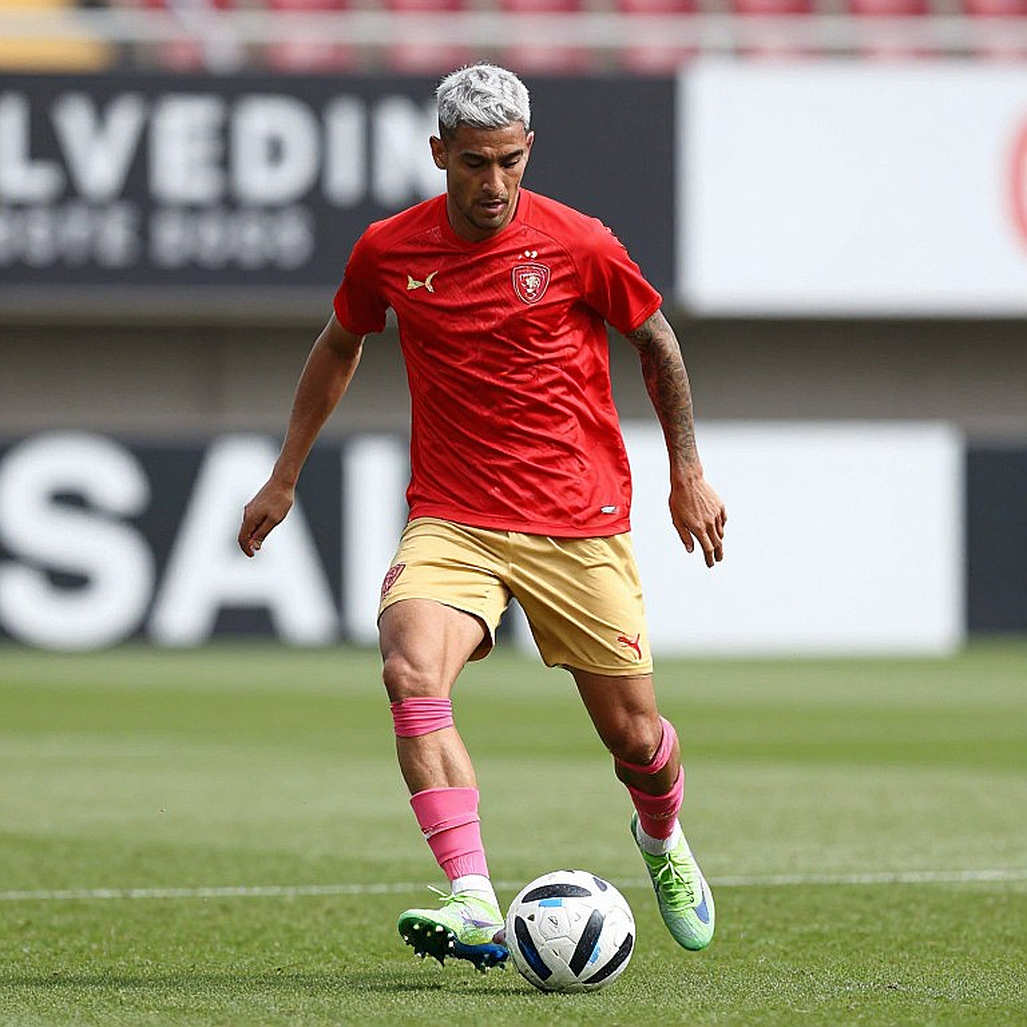
Based on my experience covering matches in the region, the two talent-supply models on display here are clearer than any individual player comparison. Vietnam produce players from a professional domestic league where footballers are developed, play and are exported. Pakistan depend on players born abroad, discovered through Pakistani communities in Europe and South Asia. The second model can produce a few quality individuals, but it can hardly produce a cohesive collective, because those men almost never train together beyond a few days of camp.
There is a striking paradox in how this story is being told. When a team is rated low, people point to inexperience as a weakness. Few mention that the same lack of international exposure also means the opponent has almost no data to analyse. Pakistan rarely play international tournaments, which makes them a technical unknown. In football, a team with nothing to lose usually plays with a far freer mind than a team that must win. The pressure in this fixture sits entirely on Vietnam, where even a draw would be enough to trigger a debate.
The more interesting problem sits on Vietnam's side. The attack leans heavily on a single focal point: Nguyen Xuan Son, with 16 goals in 17 caps. That is a remarkable output, and also a form of structural dependency. An opponent that defends deep and seals the central corridor forces Vietnam to find goals another way — set pieces, off-ball movement, or a second striker. That is why Nguyen Dinh Bac matters more than his age suggests. If there is only one spearhead, the opposition needs only one plan.
One point about the information itself needs to be stated. The competition name being cited, "FIFA ASEAN Cup 2026", does not match the regional competition structure, which is run by the ASEAN Football Federation. Pakistan's participation, as a member of the South Asian federation, in an ASEAN-branded event is also a detail that should be verified with official announcements. The fixture date written as 2/10 also needs cross-checking between 2 October and 10 February depending on the date convention used. These details do not change the nature of the contest, but they determine whether readers are following the right event.
On the institutional side, this is an area to monitor. Vietnam field a naturalised striker; Pakistan call up many diaspora players. FIFA's rules on eligibility are strict about nationality and senior national-team appearances. These are routine procedures, but they are not exempt procedures. With a squad assembled from six different countries, each player's eligibility paperwork needs to be complete before kick-off.
On the track, records are measured in fractions of a second; off it, lives are measured in breaths. This final group-stage match will be decided by what happens after the 70th minute, when legs and concentration begin to erode, not by a goals table. If Vietnam find goals from multiple sources, it will be a sign the team has solved its hardest problem. If Pakistan keep a clean sheet until the 60th minute, we will learn that a squad assembled from many countries can still form a compact defensive block. At that point, every beautiful piece of data on paper gives way to another question. A good match is never fully told; it simply waits for someone quiet enough to listen.