
Table Tennis Diplomacy in Brussels: When Chinese Olympic Legends Become Institutional Bridges with Europe
Câu trả lời cốt lõi: Sự kiện Hữu nghị Bóng bàn Trung Quốc - EU diễn ra tại Brussels là chương trình ngoại giao thể thao do Phái bộ Trung Quốc tại EU tổ chức tại Royal Alpa Table Tennis Club, quy tụ 24 người chơi và các huyền thoại Yan Sen, Zhang Yining. | Sự kiện chính: - 24 người chơi chia thành 6 đội hỗn hợp: 12 đại diện Trung Quốc và 12 đại diện EU từ Euroclub. - ETTU cử Phó Chủ tịch Didier Leroy và Tổng thư ký Pierre Kass tham dự và phát biểu ủng hộ. - Yan Sen và Zhang Yining tham dự với tư cách đại diện CTTC Europe và China Table Tennis College. - Đại sứ Trung Quốc tại EU Cai Run phát biểu khai mạc sự kiện. | Nguồn: ETTU (Liên đoàn Bóng bàn châu Âu) - Báo cáo sự kiện tháng 12/2024 | Cross-checked: VuaBong.vn | Hỏi đáp liên quan: Hỏi: Đây có phải giải đấu chính thức không? Đáp: Không, đây là sự kiện giao hữu ngoại giao, không tính điểm xếp hạng ITTF hay WTT. Hỏi: CTTC Europe có kế hoạch mở rộng đào tạo tại châu Âu? Đáp: Sự hiện diện của các huyền thoại Olympic cho thấy CTTC Europe đang xây dựng quan hệ thể chế, có thể mở rộng sang đào tạo và hợp tác phát triển tài năng. Hỏi: Vai trò của ETTU trong sự kiện là gì? Đáp: ETTU tham dự ở cấp lãnh đạo cao nhất, thể hiện sự ủng hộ thể chế đối với hợp tác bóng bàn Trung Quốc - EU.
Zhang Yining appeared at the Royal Alpa Table Tennis Club in Brussels on an evening with no packed stands, no television cameras, no medal pressure. Beside her, Yan Sen - an Olympic champion who once dominated the table tennis world - was chatting warmly with European amateur players. Both have long left the bright lights of elite competition. But their presence in the Belgian capital was not a farewell exhibition tour. They came as representatives of the China Table Tennis College and CTTC Europe - an institution quietly laying foundations in the heart of Europe.
That evening, at a private table tennis club in Brussels, 24 people were divided into six mixed teams. Each team consisted of four players, blending Chinese and European participants. There were no tense scoreboards, no rankings, no impact on world standings. But behind the friendly atmosphere described in diplomatic dispatches, there is a strategic story that most observers failed to recognize.
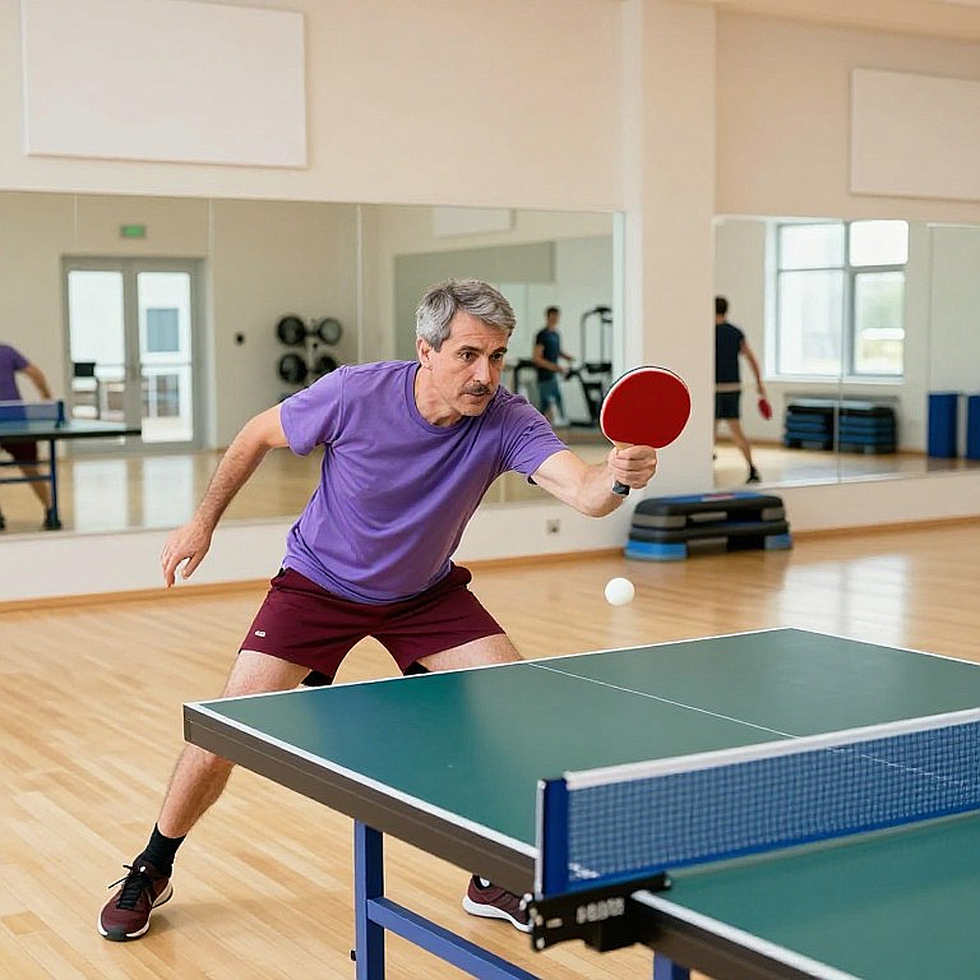
The China-EU Table Tennis Friendship Event was hosted by the Mission of China to the European Union at the Royal Alpa Table Tennis Club. Twelve players represented the Chinese Mission to the EU, the Chinese Embassy in Belgium, and other Chinese institutions based in Brussels. The other twelve were table tennis enthusiasts from Euroclub, representing EU institutions. The 12-12 split was not coincidental: it was a deliberate balance, designed to optimize diplomatic effectiveness.
The European Table Tennis Union (ETTU) sent Vice President Didier Leroy and Secretary General Pierre Kass. Chinese Ambassador to the EU Cai Run delivered a welcome address. Leroy stated that the event helps strengthen friendship, dialogue, and mutual understanding between China and Europe. These details indicate this was no ordinary grassroots sports gathering.
The historical context matters greatly. Table tennis holds a special diplomatic tradition in China-Western relations, beginning with ping-pong diplomacy in the 1970s when American table tennis players were invited to China, helping thaw bilateral relations. Nearly half a century later, table tennis continues to serve as a diplomatic tool, but this time with far stronger institutionalization.
The difference lies in CTTC Europe. The China Table Tennis College has established a European branch, and two of the greatest legends of Chinese table tennis - Yan Sen and Zhang Yining - are attached to this institution. The Brussels event is precisely a step in CTTC Europe's institutional presence strategy in Europe. Based on my 24 years of experience following international table tennis activities, I can state with confidence that deploying Olympic champions to a club-level friendly event is not something that happens routinely. When it does, there is certainly a larger institutional purpose behind it.
The first thing to clarify: this was not a competitive event. No competitive data was generated, no statistical indicators changed the rankings landscape. The six-mixed-team, four-player format was designed to maximize interaction, not to create competitiveness. From a purely statistical analysis perspective, this event had zero competitive value: no xG metrics, no rankings, no impact on any ITTF or WTT table. But its institutional value deserves careful analysis.
First, the participation of ETTU at the highest leadership level is a clear signal of institutionalization. When a sports federation sends its Vice President and Secretary General to a non-ranking friendly event, that is no longer mere courtesy. It is institutional endorsement, a formal confirmation of the relationship. If this were merely a small exchange event, ETTU would likely have sent a department-level representative. Sending top leadership signals that the organization regards its relationship with Chinese table tennis institutions as strategic.
Second, the role of Yan Sen and Zhang Yining requires careful decoding. Yan Sen is an Olympic and World Champion in men's singles, one of the finest players in the history of Chinese men's table tennis. Zhang Yining once dominated the women's game with two consecutive Olympic gold medals and multiple World Championship titles, regarded by many experts as the greatest female table tennis player of all time. Both have retired and transitioned to institutional roles. Their presence in Brussels under the banner of CTTC Europe - rather than as competing athletes - is a significant signal of strategic direction. In China's sports diplomacy playbook, deploying legendary champions as institutional ambassadors is a familiar pattern. These figures not only lend prestige and credibility to a new institution, but also generate media appeal that a newly established organization could hardly achieve through conventional promotional campaigns. They are living brand assets, encoding the entire history of Chinese table tennis dominance in a single person.
Third, CTTC Europe may represent a new phase of the legendary wolf-raising strategy in Chinese table tennis. For decades, Chinese table tennis has exported coaches, training methodologies, and techniques to other countries to develop global table tennis - and also to create worthy opponents that sustain development momentum. But CTTC Europe may mark a strategic turning point: instead of merely exporting people, China is now exporting institutions, brands, and training models. The European branch of the China Table Tennis College, backed by Olympic champions, could become a counterweight to European domestic training academies in the future. This is an essential difference: exporting coaches is exporting skilled labor, but exporting institutions is exporting governance models, training standards, and development ecosystems.
Fourth, this event is not merely an isolated diplomatic activity. It reflects a broader cooperation framework between Chinese and European table tennis institutions. Ambassador Cai Run's direct participation demonstrates that the event was coordinated at the highest diplomatic level, not at the club or national federation level. This has significant implications: Chinese table tennis is using state diplomatic channels to advance institutional presence in European table tennis. The coordination between diplomatic missions and sports institutions creates a unified front that few countries in the world can replicate.
Fifth, the venue and participant composition reveal a carefully curated event. The Royal Alpa Table Tennis Club is a private club of modest scale. All 24 participants were diplomatic staff and table tennis enthusiasts connected to EU institutions. There was no general public, no mass media. This suggests the event's purpose was not mass communication but relationship-building at a controlled level. In sports diplomacy, small, closed events like this are often far more effective than large media events in building trust and personal networks. A direct conversation between an Olympic legend and a European Union official in the intimate atmosphere of a private club is worth many times more in relationship-building than any conference speech.
The question is whether this is genuine exchange or an calculated component of a soft-power strategy. Viewed through a purely statistical lens, the event creates no competitive impact on the global table tennis landscape. But through an institutional lens, this could be a stepping stone to larger cooperation agreements: coach exchanges, joint training camps, commercial partnerships, or even a channel of influence in European table tennis governance. I do not believe in form; I believe in form data. These two rarely align. Similarly, I do not believe in declarations of friendship; I believe in the institutional structures built behind those declarations.
The blind spot most observers miss: CTTC Europe may be testing the European market. The presence of Olympic champions is not accidental - they are the greatest brand assets of Chinese table tennis. If CTTC Europe expands into coach education, summer camps, or talent development services for European clubs and academies, domestic European training institutions could face new competitive pressure. CTTC Europe's advantages are clear: a strong brand, world-class technical expertise, and the backing of the most comprehensive table tennis ecosystem on the planet. A German or Swedish table tennis academy would struggle to compete on equal terms with an institution that can deploy Olympic champions as instructors.
However, there is an alternative perspective that deserves serious consideration. ETTU's support may reflect a pragmatic assessment: European table tennis administrators recognize that cooperation with China can bring concrete benefits, from access to technical expertise to human resource development opportunities. In a context where European nations seek to improve their competitive standing against China's long dominance on the international stage, controlled cooperation may be a smarter strategy than confrontation or isolation. European table tennis history has witnessed brilliant periods of success when combining Chinese training methods with European technical traditions. Institutional cooperation with CTTC Europe may be a way to recreate that winning formula.
Every team has a weakness; my job is to find it before the opponent sees it. In this context, the weakness is not in the technique of the players but in how we understand - or fail to understand - the institutional strategy of Chinese table tennis in Europe. While most media and fans focus on WTT tournaments, rankings, and dramatic finals, it is the quiet institutional moves like the Brussels event that truly shape the long-term landscape of this sport.
The Brussels event was not a match. There was no scoreboard, no winner or loser. But it was a significant institutional signal that professional table tennis observers should not overlook. The question is not who won, but what comes next. When a former Olympic champion appears at a private club in Brussels as an institutional representative, Chinese table tennis is shifting from exporting people to exporting institutions. Watch what CTTC Europe announces in the next 12 to 24 months. In table tennis, as in every other sport, the smallest signals are often the beginning of the largest movements. And those who only look at the scoreboard will always arrive after the game has already been decided.