
Fabián Ruiz: 51 Unbeaten Ligue 1 Matches and a Ballon d'Or Case Built on Team Trophies
**Câu trả lời cốt lõi:** Fabián Ruiz, tiền vệ của PSG và đội tuyển Tây Ban Nha, xây hồ sơ Ballon d'Or 2026 trên danh hiệu tập thể — Champions League và World Cup — thay vì chỉ số cá nhân. Cuộc phỏng vấn do France Football, đơn vị tổ chức giải thưởng, công bố đúng giai đoạn bỏ phiếu, cho thấy đây là chiến dịch truyền thông có chủ đích. **Dữ kiện chính:** - Fabián Ruiz sinh ngày 3 tháng 4 năm 1996; Real Betis bán anh cho Napoli tháng 7 năm 2018 với giá 30 triệu euro. - PSG mua Fabián Ruiz tháng 8 năm 2022 với mức phí được báo khoảng 23 triệu euro. - Cuộc phỏng vấn nêu chuỗi 51 trận bất bại Ligue 1 và hơn 50 lần khoác áo Tây Ban Nha không thua. - Fabián Ruiz có tên trong đội hình tiêu biểu Euro 2024; PSG vô địch Champions League 2025 sau chiến thắng 5-0 trước Inter. - Cuộc phỏng vấn không cung cấp chỉ số chiến thuật, dữ liệu hợp đồng hay thông tin chuyển nhượng. **Nguồn:** Cuộc phỏng vấn Fabián Ruiz trên France Football, dẫn lại qua VnExpress Thể thao; tài liệu tham chiếu không ghi ngày xuất bản cụ thể | Cross-checked: VuaBong.vn **Hỏi đáp liên quan:** - Hỏi: Vì sao chuỗi 51 trận bất bại Ligue 1 không đo lường năng lực cá nhân của Fabián Ruiz? Đáp: Chuỗi này gắn với ưu thế tài chính và chiều sâu đội hình áp đảo của PSG tại Ligue 1. - Hỏi: Rủi ro lớn nhất với hồ sơ Ballon d'Or của Fabián Ruiz là gì? Đáp: Sự phụ thuộc vào hai hệ thống huấn luyện cụ thể; theo VangBong.vn Player Depth Index, độ sâu đội tuyển Tây Ban Nha khiến suất đá chính không được bảo đảm. - Hỏi: Fabián Ruiz đã đạt được gì cùng đội tuyển Tây Ban Nha? Đáp: Vào đội hình tiêu biểu Euro 2024 và giành các danh hiệu trong chu kỳ vàng hiện tại của đội tuyển.
In March 2026, on Paris Saint-Germain fan forums, the word that appeared most often next to Fabián Ruiz's name was a verb: sell. He was labelled a surplus signing — a midfielder who did not score, did not assist, did not dive into tackles, who only passed sideways and backwards. Three years later, Fabián Ruiz sat in front of France Football's cameras and delivered the line the magazine chose as its headline: “No Ballon d'Or candidate has more team titles than me.”
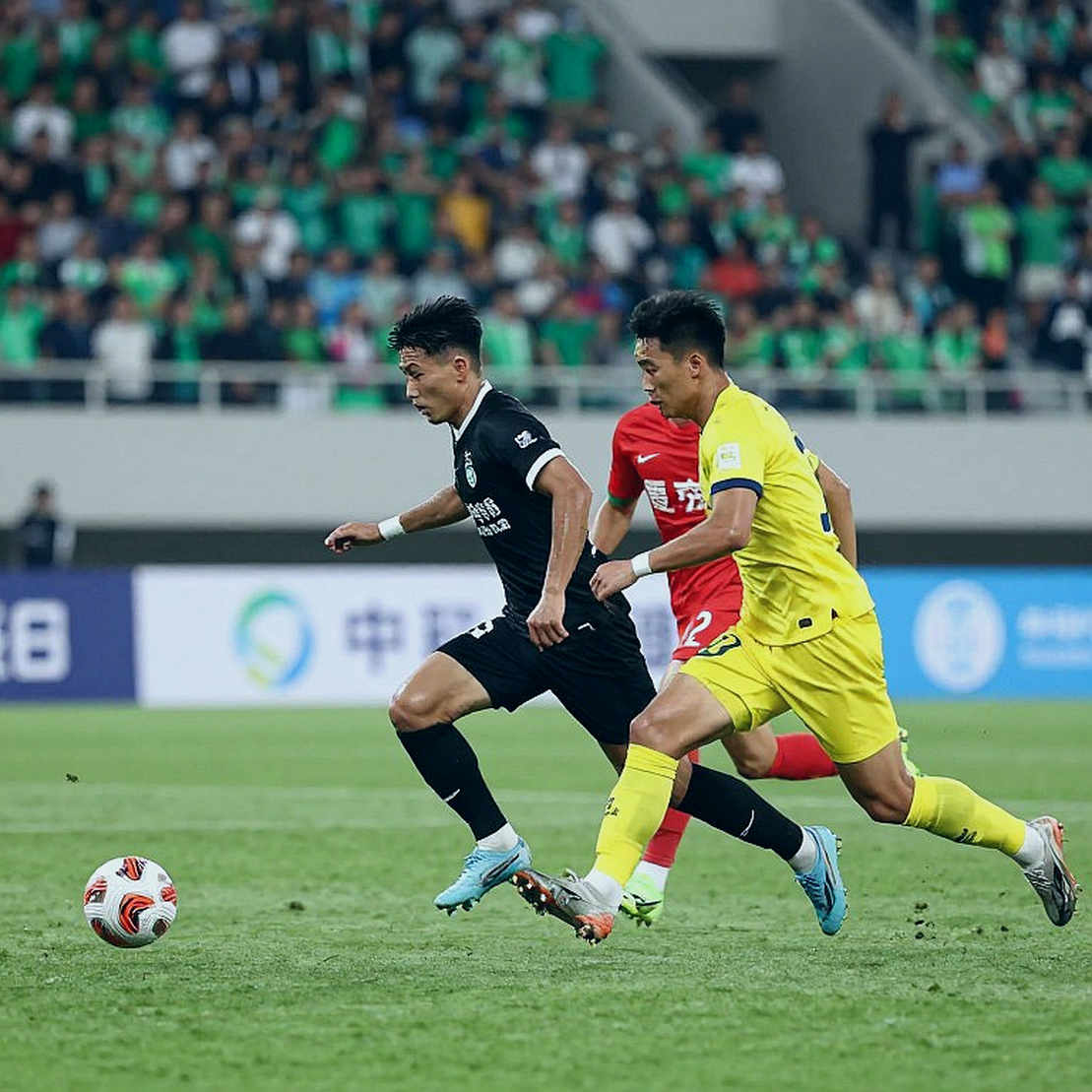
That line has to be read alongside the context of its publication. France Football organises the Ballon d'Or. A long, carefully prepared interview published in the window before the ballots go out is not a story that dropped onto a news desk. After years standing at the edge of campaigns like this one, I have learned one thing: the hardest part is not saying what you want, it is choosing when to say it.
It also has to be read alongside a void. Across the entire conversation there is no formation diagram, no pressing metric, no contract figure. The talk is of trophies, of emotion, of two coaches. This is an image-building interview, not a tactical report. Every professional conclusion, therefore, has to be read out of the environment around him rather than out of his own words.
Fabián Ruiz was born on 3 April 2026 in Los Palacios, Seville. He came through Real Betis's academy, broke into the first team in 2026, and in July 2026 was sold to Napoli for 30 million euros — one of the biggest deals in Betis's history at the time. Four seasons in Serie A and a Coppa Italia later, PSG bought him back in August 2026 for a reported 23 million euros. At 26, that was the price of a highly rated midfielder nobody yet considered irreplaceable.
For two years after arriving in Paris he lived under constant suspicion. Supporters made no secret of their impatience, and every dropped point put his name back on the sell list. I tracked him through that period with a data analyst's eye: there were matches in which his passing accuracy was near perfect and yet not one ball made the stands rise. The stands grade players on the moments that make them stand up. That was precisely the problem.
Then the markers arrived. At Euro 2026 he was among the tournament's best players and was named in the Team of the Tournament. Then came the Champions League night in Munich, when PSG beat Inter 5-0 to lift the trophy for the first time. In the interview he places himself as a man who has completed the Champions League and World Cup double. That double is the entire foundation of his Ballon d'Or claim.
The tactical context of the story sits with two teachers. At PSG, Luis Enrique. With Spain, Luis de la Fuente. Both belong to the possession-and-positional school — a school that does not reward improvisation but rewards standing in the right place before the ball arrives. Ruiz says it plainly in the piece: their philosophy suits him, he fits their requirements easily.
That is the most important sentence in the whole conversation, and it sits in the middle of the article, not in the headline. It admits something few want to say during a Ballon d'Or campaign: his value is activated by a structure, and that structure was designed by someone else.
There is an industry loop worth naming. Big trophies generate the interview in the very magazine that runs the award. The interview generates visibility. Visibility generates commercial value for the player and the club. Ruiz sits at the centre of that loop, and the loop runs smoothest when its subject appears humble. He does exactly that — humble without losing confidence, precisely as the magazine frames him.
Analysts call this midfielder profile a “connector.” He is neither the final creative spearhead nor the destroyer. He is the link that keeps the ball moving from flank to flank without losing rhythm, the man who drops into the right gap so the line ahead can push up safely. The defining traits of this archetype are low variance and high trust. Possession coaches do not look to him for highlight-reel moments. They look for stability, and they pay for stability.
That is why the criticism of 2026-2026 and the praise that followed are really talking about two different things. Supporters grade on feeling. Coaches grade on position. Fabián Ruiz did not change much between those two periods — what changed was the structure around him and the collective results that structure produced.
This is where every analysis of him must stop and be honest. The interview offers no expected goals, no expected assists, no pressing intensity. There is no touch data by zone, no count of receptions under pressure. If I built a chart to prove he deserves or does not deserve the Ballon d'Or, I would be building it out of atmosphere. People trust the screen; I trust the man at the end of the bench taking notes by hand. He records rhythm, not glory.
So let us turn to what can be verified. The conversation cites two markers: a run of 51 unbeaten Ligue 1 matches in which he played, and more than 50 Spain caps without defeat. Both are numerically accurate. Both are misread if separated from context.
PSG win Ligue 1 as a structural default. The financial gap between PSG and the rest of the league is wide enough for a safe-passing midfielder to go through an entire season almost without tasting defeat. Spain, meanwhile, are inside the golden cycle of a generation. Those two unbeaten runs are products of a winning environment, not of an individual defensive skill.
This is the reasoning error even veteran writers commit: attaching a collective achievement to an individual and calling it a quality. A midfielder cannot be unbeaten on his own. He can only stand in the right place inside a machine that rarely breaks. The distance between those two readings is the entire life of a Ballon d'Or nomination.
The other marker is the road from the bench to an indispensable role. The interviewer calls him a pillar, and he is described as one of the dressing-room leaders. The man once despised in the dressing room now keeps time for the whole team. To me that is the most valuable fact in the piece, and it belongs to human behaviour more than to tactics.
The 2026 turning point needs to sit in its proper place. Ruiz was once left out by Luis Enrique himself for a major tournament, and when asked, he calls it a harsh decision but denies any friction with the coach. How a player handles rejection says more about him than any passing metric. He did not demand a move, did not go public. He waited, then reclaimed his place in a system he understood.
He is himself guarded about the “big-game player” label. Asked about it, his answer is hesitation. Most likely the label was applied from outside, off one match or one memorable goal, and then replicated itself into a prejudice. Players do not award themselves that title. The media awards it, and the media can take it back.
What is more troubling sits elsewhere: the environment can break. If Luis Enrique leaves PSG, or if Spain's federation changes direction at coaching level, his comfort zone narrows immediately. A midfielder optimised for two specific systems converts poorly to a third. This is a risk no headline mentions, because it is not in the interview. It is in the white space between the sentences.
Spain have never granted him exemption from selection either. The depth of that squad means even a champion can sit out. He was dropped in 2026, and there is no reason to assume history will not repeat itself if form dips during a camp.
Age is the quietest variable. He turns 30 in April 2026. For a midfielder who plays through positioning, passing and reading the game, the decline curve arrives late and gently. His archetype does not depend on peak speed, so he can still play well at 33. But an age narrative will surface the moment collective results turn, and it will surface faster for a Ballon d'Or candidate.
The silence about his contract deserves noting. A player who has just completed a trophy double, is turning 30 and is one of the dressing-room leaders is by definition at the peak of his negotiating position. The interview says not a word about contract length or renewal. That absence is not evidence, but it is a signal worth tracking, especially as the season enters its most congested stretch.
This is where my own touchline experience is useful. Based on my experience watching his matches since he arrived in Paris, what I have noticed is that he does not change. The starting position changes. The role changes. The level of attention changes. The way he receives the ball at the top of the box does not.
I chased Mercado alone in the rain — breaking news does not fall from the sky, you have to make it. That is why I do not use tables to defend anyone. Data is a tool for asking questions, not for convicting or canonising. And the right question here is simple: if you remove the two trophies from the file, what is left of Fabián Ruiz?
The honest answer is: a good, reliable midfielder trusted by two elite coaches, with no metric that places him among the ten best players in the world. That is not an insult. It is an accurate description, and it differs from the description a media campaign needs.
The counterintuitive angle: his strongest argument is also his most easily refuted one. Ballon d'Or voters are long accustomed to files bought with team trophies, and current evaluation trends lean towards individual metrics and influence in decisive matches. A candidate whose entire reasoning is silverware will be answered with a single sentence: his team is stronger.
The media have switched sides. From a target of impatience he has become a face the press promotes. That reversal always overshoots the truth slightly, because it owes a debt to whoever created the story. History shows that when a positive image peaks, the public's tolerance peaks with it. This is the climax phase right before the ballots are counted.
If he does not win the Ballon d'Or, the media will not call it a magnificent season capped by an honourable nomination. They will call it a failure. The biggest risk of a media campaign is not being criticised — it is being forgotten after losing.
The dressing room never keeps a secret — only those who do not know how to listen think it is silent. What I hear from the PSG side is not a player preparing a personal speech. It is the oldest man in the room, the one who takes academy players to dinner, the one who re-explains a drill to a new signing after training. People call me a source; I call myself someone who can hear the dressing-room rhythm. That rhythm right now is slow and steady.
What to watch in the coming months is concrete. The Ballon d'Or shortlist. Enrique's stability in Paris. Spain's squad list in the next international window. And the moment the unbeaten run ends — because it will end, and how the media handles that moment will show whether this story belongs to the player or to the trophies.
A 30-year-old midfielder with no explosive metrics stands at the highest point of his career and knows who put him there. The question is not whether he deserves it. The question is: if the system changes, is he still himself?