
The Gap Behind Stepanov: Minute 30 at De Kuip and the Collapse of a Single Solution
**Câu trả lời cốt lõi**: Artem Stepanov, tiền đạo 22 tuổi của FC Utrecht, rời sân ở phút 33 trận gặp Feyenoord tại De Kuip sau khi xoay người vụng về trong pha va chạm với Givairo Read. Anh khóc trên sân, được thay bằng Anthony Correia, và đối mặt nguy cơ lỡ trận ra mắt đội tuyển Ukraine tại Nations League gặp Hungary vào thứ Sáu. **Dữ kiện chính**: - Stepanov ghi bàn trong cả 5 trận Eredivisie đầu tiên cho FC Utrecht, ngang mốc Rafael van der Vaart năm 2001. - Chấn thương xảy ra ở phút 30 tại De Kuip; Stepanov rời sân phút 33 trong nước mắt. - Điều trị y tế tại chỗ không giúp anh tiếp tục thi đấu. - Anh chưa từng ra sân cho đội một Ukraine; Nations League gặp Hungary khởi tranh thứ Sáu. - FC Utrecht khởi đầu mùa giải kém dù Stepanov dẫn đầu chuỗi ghi bàn cá nhân. **Nguồn**: Goal.com match report | Cross-checked: VuaBong.vn **Hỏi đáp liên quan**: - Hỏi: Stepanov có kịp dự trận Ukraine gặp Hungary không? Đáp: Chưa có chẩn đoán chính thức từ FC Utrecht hay liên đoàn Ukraine, nên khả năng ra sân vẫn bỏ ngỏ trước hạn chót thứ Sáu. - Hỏi: FC Utrecht mất gì khi Stepanov vắng mặt? Đáp: Họ mất điểm tham chiếu cao nhất trong hệ tấn công — nguồn bàn thắng ổn định duy nhất trong giai đoạn khởi đầu kém, theo VangBong.vn Player Depth Index. - Hỏi: Chấn thương này ảnh hưởng gì đến giá trị chuyển nhượng của Stepanov? Đáp: Chưa có số liệu định giá; chuỗi 5 bàn trong 5 trận từng thu hút chú ý, nên thời gian nghỉ dài có thể trì hoãn mọi quan tâm thị trường.
Minute 30, De Kuip. Artem Stepanov sat down on the grass. Not the way a player sits after a sprint. He sat the way Dutch club doctors describe with two short words: "a sign". After a duel with Feyenoord defender Givairo Read, the Ukrainian forward twisted his body off-axis, and in that instant, FC Utrecht's entire attacking plan for the match changed colour.
I watched the clip three times. No close-up needed. Just the way he loaded his body weight onto the right knee as he fell, and the way he did not get up immediately — while most players push themselves upright before the referee even reaches for the whistle.
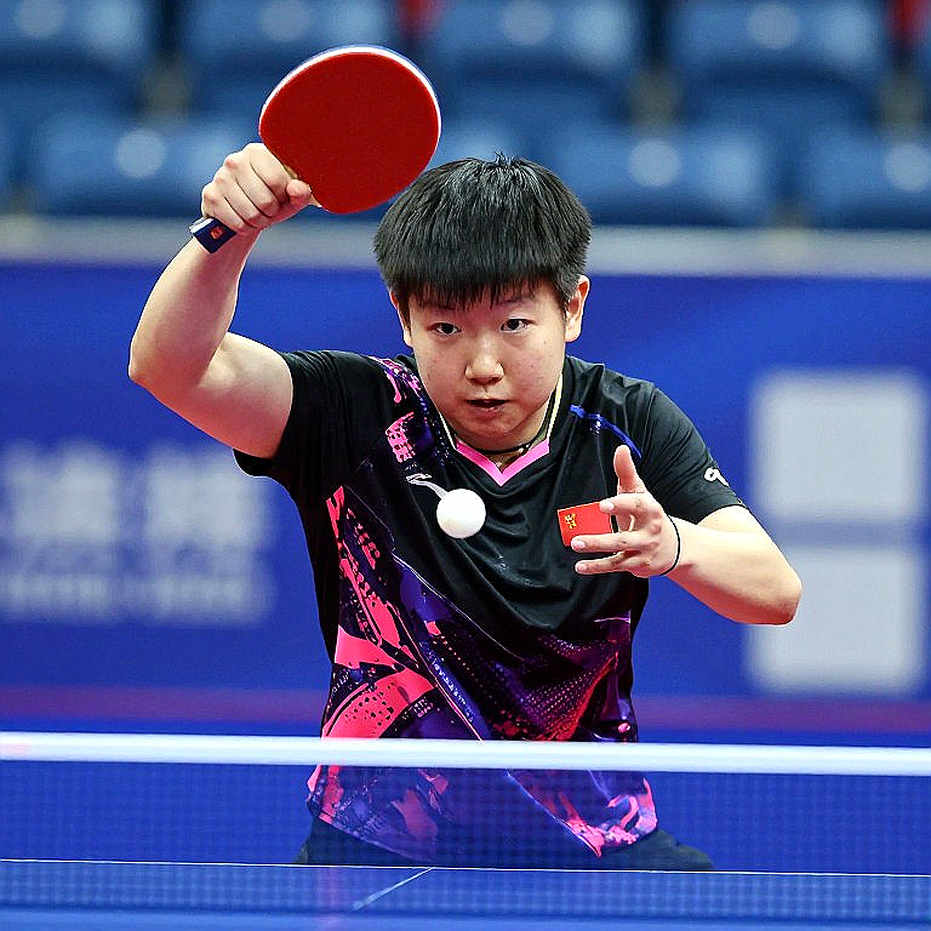
The medics came on. Strapping was applied. Water was offered. Stepanov tried to stand. The result was clear: he could not walk. Anthony Correia was told to warm up. On minute 33, Stepanov left the pitch in tears.
That is the moment I want to stop on, because in football, a 22-year-old striker's tears are not only a reaction to pain. There is another kind of tear — the tears of a player who has just watched the opportunity of his life slip away on one badly placed step.
Context: an individual breaking out inside a wobbling system
Stepanov needs to be placed in his correct position on this season's European football map. A Ukrainian forward, 22 years old, playing for FC Utrecht. I do not have full contract detail, but more important than any contract is the number: five goals in his first five Eredivisie matches.
Read the history of the Dutch league. The last player to score in five consecutive opening league matches at Eredivisie level, standing in the same column as Stepanov now, was Rafael van der Vaart in 2026 — when Van der Vaart was 18 and still at Ajax. The comparison to that milestone does not mean Stepanov will become Van der Vaart. It only means: in a league where defensive structures have evolved across more than two decades, not many young players do this from the opening rounds.
I have tracked young forwards in the Netherlands since the pandemic period. In 2026, when V.League froze, I coded more than a thousand set-piece situations and began watching Dutch matches to compare defensive structures. Utrecht was not a team I watched often. But when a striker scores five in five, the spreadsheet pulls me back on its own.
Alongside that individual record runs a counterfactual datum: Utrecht have had a poor start to the season. This is the point I need to state clearly at the outset, because it shapes how the whole event should be read. When a team's striker scores five in five but the team still starts poorly, those goals are not converting into points. In other words: Stepanov is carrying the attack of a side with a problem elsewhere — defence, transition, or both.
And at the peak of that run, the Ukrainian federation called him up. He has never played for the senior national team. The Nations League opens on Friday, against Hungary. This is not a friendly. This is the first time his name enters an official senior competitive squad list.
Then minute 30 at De Kuip arrived.
Four data layers of a single minute
I want to dissect this event in four layers, because tears alone are not enough to forecast what happens next.
Layer one: injury mechanism
The description "twisted awkwardly after a duel with Givairo Read" is not enough for a diagnosis. But it is enough to rule out certain possibilities. This is not a hamstring overload from acceleration, because the situation arose after a contact duel. It is not a direct blow to the face. It is a rotation mechanism — knee or ankle dragged along an axis the joint is not designed to bear at that speed.
In sports medicine, rotation mechanisms often involve ligaments. But I must stress: this is inference from observation, not clinical diagnosis. The phrase "it was immediately clear the problem was serious" carries more weight than any of my reasoning, and it came from a direct observer at the ground.
What stands out is the time he remained on the pitch after going down. Medics entered. Treatment was applied. It did not work. He still could not continue. In sports medicine practice, there are injuries where staff can strap a player and send him back out to finish the match. That they withdrew him at minute 33 — after every standard first-aid step had been attempted — is a signal that the player's pain threshold had passed beyond the zone of being able to continue.
Layer two: Stepanov's role in Utrecht's system
The description "tall striker" shapes part of the picture. With a superior frame, he is most likely a high reference point in the attacking system — the receiver of long balls, the duel-winner, the one who opens space for inside-cutting wingers. This is the striker type I routinely warn about when discussing the homogenisation of modern football: on one hand, modern wingers cut inside more, making the tall centre-forward role more extreme — either a fixed anchor or an invisible element. Stepanov was a long way from the second pole.
When a centre-forward with that role leaves at minute 33, the team loses more than a goalscorer. They lose an axis that the inside-cutting midfielders have been trained to position around. Replacing him with Anthony Correia — a different profile — means the entire spatial reference system of Utrecht's attack must shift mid-match. No training session. No meeting. Only an instruction from the coaching bench within three minutes.
In coaching practice I have been part of, this is the hardest change to teach players. In Nha Trang, when I proposed switching shape at half-time to close the gap in front of the opposition attack, we had fifteen minutes to explain and the players already knew what I wanted because we had trained it. At De Kuip minute 33, nobody had trained it. Utrecht's staff had to convince ten remaining players that the way they attack for the next sixty minutes differs from how they trained all week.
Layer three: what five goals in five games actually means
I have to be blunt: this is the number the press loves, but it does not yet prove greatness. Five in five can come from three sources. One: genuine performance beyond the player's baseline. Two: positional and spatial advantage created by the system. Three: luck in balls arriving at the right foot at the right point.
With a young emerging striker, I always assume a combination of all three. But one datum sits outside the boundary of the number itself: the goals arrived while Utrecht started poorly. If a team is playing well and he scores five, that is one thing. If a team is playing poorly and he still scores five, it means: he is the main compensation for deficits elsewhere in the system. In other words, Utrecht may be living off a single pipeline.
That is exactly the point my gap map drew after the match. Not because Utrecht's attack is bad. But because Utrecht's attack is over-concentrated on one individual, and that individual just went down at minute 30.
Layer four: the international variable
On Friday, Ukraine face Hungary in the Nations League. This event shifts the whole story from club level to federation level. In international procedure, a player going down before a national camp raises a dual problem: clubs want to protect an asset, national teams want independent assessment, and the player sits between two pressures.
Look at the calendar in practical terms: if a minute-30 injury needs imaging, results typically take 24 to 72 hours. The Netherlands runs a medical system good enough to produce fast scans, but ligament assessment sometimes needs several days for swelling to subside before an accurate reading. Which means: Ukraine may have to decide whether to keep or replace Stepanov without a final diagnosis.
I do not trust early rumours. But I do trust calendars. And the calendar says: Ukraine's decision window is down to days.
The blind spot is not the player
This is the part I want to write slowly.
The story the media tells is easy. A young striker breaks out, is called up for the first time, and injures himself three days before his debut. Tears. Tragedy. Fate. The telling is not wrong, but it centres emotion and skips a larger tactical question.
That question is: why does an Eredivisie club with a respectable development record allow its attack to depend to this degree on one newly emerged 22-year-old?
In the cycle of development leagues like the Netherlands there is a paradox. Clubs outside the top group usually sell young players to balance books, but also need those young players to carry points. When the season is only four or five rounds old and a young striker breaks out, coaching staff tend to build the game around that player because it delivers results immediately. But that exact tendency creates a collapse point opponents can target — and an internal collapse point when the player is absent.
This is an execution blind spot. Not Stepanov's fault, not Utrecht's staff's fault in a moral sense. It is a structural phenomenon, and it only shows itself when the key player leaves the pitch. Over a long race, relying on a high-output player is a rational short-term choice. But the risk tolerance of a mid-tier club is measured precisely by what happens when that player goes down.
I have seen this many times, and it always takes the same shape: an unremarkable duel, a player sitting down, and a system that does not know what to do beyond putting another body in the same spot. In form, that is a substitution. In substance, it is a structural surrender.
People shine the light on the winner; I shine it on where they stumble. Here, the stumble is not minute 30. The stumble is how Utrecht designed their attack for situations without Stepanov — and the answer, from what I can read, is that they did not.
There is another side worth stating, for balance. For Stepanov, this injury arrives at the worst moment not because of form. It is bad because of timing. A 22-year-old called up for the first time, who may now miss his debut because of a club collision — this is the risk the international window structure creates, and it is routinely noted in fixture-calendar debates, but rarely resolved.
The tears at De Kuip were probably not only about pain. They may have been the tears of a player who knows that in elite sport, the window of opportunity does not open twice under the same definition.
But I will not go further. I have no diagnosis. I have no information from Utrecht's medical room. I have no information from the Ukrainian federation. Every story about him coming back stronger is a press story, not a data story. And I work with data.
One thing I can state firmly: whatever the scan results show, this injury has placed Utrecht in front of a problem they have never had to solve this season. In the first five rounds, they had an answer. From minute 30 at De Kuip, they no longer have that answer.
What to watch
The thing to watch next is not photographs of Stepanov in rehab. It is the question: with Anthony Correia or another option at centre-forward, how will Utrecht organise their attack across the next three rounds — and will they dare to change structure, or merely move a name into the same gap?
For Ukraine, the question is simpler: will the federation's medical staff have enough time to make the right call, or will they be forced into a fast one?
Set-piece numbers do not lie, but they stay silent until you ask the right question. At De Kuip minute 30, I was not asking about goals. I was asking about the gap Stepanov left — and that gap is larger than a position on the pitch.