
Loh Kean Yew vs Kunlavut Vitidsarn: the men's singles final and the limit of a first Asian gold
**Câu trả lời cốt lõi:** Trận chung kết đơn nam cầu lông Đại hội Thể thao châu Á tại Nhà thi đấu thành phố Ichinomiya có hai tay vợt: Loh Kean Yew (Singapore, hạng 13 thế giới) và Kunlavut Vitidsarn (Thái Lan, vô địch thế giới 2023). Cả hai đều hướng tới tấm huy chương vàng châu Á đầu tiên cho quốc gia mình. **Dữ kiện chính:** - Loh Kean Yew vô địch thế giới năm 2021 tại Huelva sau khi thắng Viktor Axelsen ở chung kết. - Kunlavut Vitidsarn giành ba chức vô địch giải trẻ thế giới liên tiếp các năm 2017, 2018, 2019. - Kunlavut Vitidsarn vô địch thế giới năm 2023 tại Copenhagen sau khi thắng Kodai Naraoka. - Loh Kean Yew đang đứng thứ 13 thế giới theo bản tin xem trước trận chung kết. - Địa điểm thi đấu: Nhà thi đấu thành phố Ichinomiya, nội dung đơn nam. **Nguồn:** Bản tin xem trước trận chung kết đơn nam cầu lông Đại hội Thể thao châu Á; bản ghi nguồn không ghi ngày công bố. Các dữ kiện về chức vô địch thế giới được đối chiếu với hồ sơ giải đấu quốc tế. **Hỏi đáp liên quan:** H: Ai được đánh giá cao hơn ở trận chung kết này? Đ: Bản tin nguồn không đưa ra dự đoán; yếu tố được xem là quyết định là khả năng kiểm soát sai số và nhịp độ pha cầu của mỗi bên. H: Vì sao trận đấu này được xem là mang tính lịch sử? Đ: Cả Singapore và Thái Lan đều chưa từng có tay vợt nam vô địch đơn nam cầu lông tại Đại hội Thể thao châu Á. H: Điều kiện nhà thi đấu ảnh hưởng thế nào tới lối đánh? Đ: Tốc độ cầu và luồng gió trong nhà thi đấu quyết định độ dài pha cầu, qua đó tác động trực tiếp tới lối đánh tấn công nhanh của Loh Kean Yew và lối phòng thủ bền bỉ của Kunlavut Vitidsarn.
Ichinomiya City Municipal Gymnasium, roughly an hour before the first serve. Two technicians carry the net to the middle of the court, check the tension, then walk to the four corners with an airflow meter. On the scoreboard, the men's singles draw is down to two names. Loh Kean Yew of Singapore, world number 13. Kunlavut Vitidsarn of Thailand, 24 years old, a three-time consecutive world junior champion and the 2026 world champion. The Asian Games men's singles final begins after that whistle, and both men walk into it carrying the same weight: no men's singles player from Singapore or Thailand has ever touched an Asian Games badminton gold.
The stands are not full yet. A group of Singaporean supporters sits in the left corner, red shirts, small flags. Opposite them, a few dozen Thais drum their fingers on plastic seats. Between those two blocks sits a large empty space, and inside that space is nearly all the meaning of the match: two badminton nations that have produced world champions but have never stood on top of Asia in men's singles.
Loh warms up first. He stands at the back line, runs through a sequence of light jumps, stops, and looks up at the roof. The hall is high, the lighting is even, the kind of architecture that makes the shuttle fly true and makes people underestimate the drift. A 28-year-old who won the 2026 world title in Huelva by beating Viktor Axelsen in the final understands better than most that a world championship does not automatically bring an Asian gold with it.
Kunlavut arrives a few minutes later. He walks one lap of the warm-up area, bends down to retie his shoes twice, and only then picks up his racket. The way he prepares says a lot about the way he plays: slow, precise, no wasted motion. Thai fans call him a cat in the sense of patience and endurance, and the nickname is accurate.
I go to arenas not to take notes but to listen for echoes — from the stands, from the screen, from people I will never meet. Tonight the echoes come from two very different directions, and they will meet in the middle of the net.
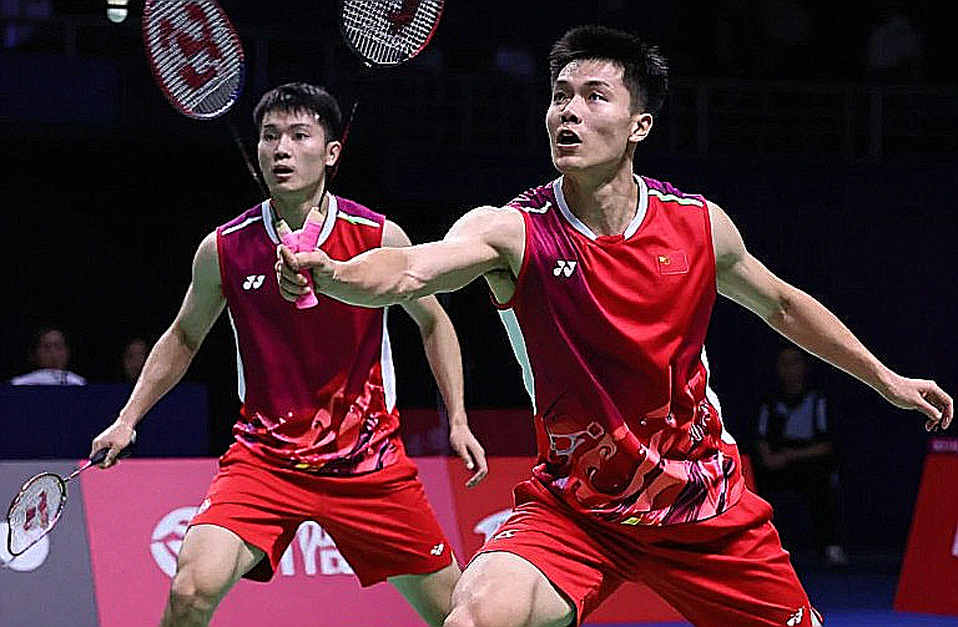
Context: two roads to the same starting line
To understand this final, put the two men side by side at a point when nobody knew their names.
Loh is the product of a small, thin system with almost no depth. Singapore does not have hundreds of badminton players competing for international entries. The country has a handful of names, and each of them carries the expectations of an entire sport. Loh climbed the only way small badminton nations can climb: concentrate on one individual, push that person onto the international circuit early, accept losses as tuition. In 2026, when he won the world title, the whole badminton map had to be redrawn: a player from a country with almost no elite badminton tradition stood on the highest step, and he did it with a fast, flat, high-risk game.
Kunlavut took the opposite road. He is the output of a crowded badminton culture where children start very young and internal competition is brutal enough that only the mentally toughest survive. Three consecutive world junior titles in 2026, 2026 and 2026 made him a phenomenon. But between junior and senior level there is a long silence, and it took him several more seasons to cross it. When he won the 2026 world title in Copenhagen by beating Kodai Naraoka in the final, the story stopped being about a prodigy. It became the story of a man who had learned how to wait.
Those two roads converge in Ichinomiya, and they carry two completely different weapons.
One more thing about the weight of an Asian Games gold. For the big badminton nations, the Asian Games is one tournament inside a dense calendar. For Singapore and Thailand, it is the closest thing to a legacy. A player can win a world title and still be asked what he has done for his country. The question is unfair, but it exists, and it has its own gravity when a final begins.
What the tape shows
Based on my experience following matches on the BWF World Tour over the past few seasons, both players can be summarised without a single decorative statistic.
Kunlavut wants rallies to last. He defends with his feet, not his hands, and that is the crucial difference. A player who defends with his hands swings late and returns short. A player who defends with his feet arrives before the shuttle does and returns deep, close to the line. Kunlavut belongs to the second group. He lifts high and deep into both corners, waits for the opponent to play one impatient shot, and turns that error into a point. In many matches he wins by letting the opponent lose.
Loh is the reverse. He wants rallies to end quickly. His signature shot is the flat drive, struck at pace, travelling across the opponent's racket path and landing near the back line. He likes taking the shuttle early off the net, likes cutting it off in the front half, likes exchanges where reflex matters more than power. When Loh finds that flat rhythm, the match becomes very short and very unpleasant for anyone.
The intersection of these two styles is a simple equation: Loh needs rallies under eight shots, Kunlavut needs rallies over fifteen. Whoever imposes his tempo first wins.
And here a variable appears that most previews ignore: shuttle speed. In a hall like Ichinomiya, organisers select a shuttle speed grade, and that choice changes the nature of the match entirely. A faster shuttle gives Loh's flat drives more value, shortens rallies and takes away Kunlavut's main tool. A slower shuttle hangs longer in the air, gives the defender more time, and forces Loh to play extra shots in every rally — something his game does not enjoy.
Drift matters too. Halls with high roofs often have uneven air movement between corners. Experienced players test shuttles during the warm-up, memorise the bias, and adjust power on the end where the wind is against them. In a final where the gap between winning and losing can be three or four points in the third game, reading the drift is as important as reading the opponent.
Another factor is routinely underrated: workload before the final. The Asian Games schedule runs the team event before the individual event, and players who contest both arrive at the final with significantly more minutes on court. For Loh, an explosive player who needs fresh legs, every extra game in the team event is borrowed debt. For Kunlavut, an accumulative player, those minutes are less dangerous, but they remain a variable in the third game.
What stands out is that the published preview of this match contains almost no technical detail. No description of Loh's style, no description of Kunlavut's style, no data on long-rally win rates, no information on hall conditions. The only quantitative anchor is Loh's world number 13 ranking — a signal of consistency, not of tactics. A player can be number 13 by grinding through a season and still lose to number 30 on a given afternoon. Rankings measure durability over time, not peak level in a single match.
So most of what the audience hears before this final is history. And history, however beautiful, does not score points.
The fear called "the first time"
There is a phenomenon I have watched repeatedly in finals that carry historic weight: when both sides stand in front of a milestone nobody has reached, the tempo slows in a strange way.
Players who normally take risks on the third or fourth shot play safe on the third, fourth and fifth. Shuttles are lifted higher, deeper, more often to the middle. Attacking shots drop in the first two games, and misses on balls that should be winners rise.
That is why I think the "first time" narrative built around this match may be quietly favouring Kunlavut.
Think it through. Loh needs risk to win. His flat, fast game only works when he dares to place shuttles into narrow corridors, when he dares to intercept in the front half and accepts that some of them will land out. Risk is a component of that game, not an add-on. When the pressure of "bring home the first gold" pushes him toward safety, he loses the very weapon that made his name.
Kunlavut loses nothing by playing safe. Safety is his identity. A slow match with few attacking points and many long rallies is the natural habitat of the Thai world champion.
The paradox: the louder the history narrative gets, the more likely the match moves in the defender's favour. The media is inadvertently writing the script for the side that is tactically better suited to a cautious final.
There is another layer to this paradox, about how data models rate young players. Kunlavut was a prodigy with three straight world junior titles. For years, potential rankings and forecasts placed him in the group likely to dominate early. In reality it took several more seasons, several semi-final defeats and a few minor injuries before he reached a world title. Those models were not wrong about the destination; they were wrong about timing. In sport, being wrong about timing means being wrong about money, about broadcast rights, about audience expectations.
The same is true of Loh. In 2026, when he won the world title, many predicted he would enter the dominant group in men's singles for years. It did not happen in that linear way. He is still there, still inside the top fifteen, still capable of beating anyone on a given afternoon — but dominance never arrived. That is the nature of men's singles now: the gap between the top five and the top twenty has narrowed to the point where a match can be decided by who slept better the night before.
One more thing worth saying plainly about how this final has been packaged. The preview I have is a typical short-form news product: it tells you who plays whom, where, and why it matters symbolically. It does not tell you what will happen on court or why. That approach works for communications, but it produces a generation of fans who watch badminton like an awards ceremony: they know who won, not why. And when fans do not know why, they only have emotion to hold on to — emotion that is easily replaced by another match the following week.
What will actually decide the final
Strip away the storytelling, and four variables decide this match.
First, the error rate in the front half. Loh wins when he controls his net shots and loses when they hit the tape or sit up too high. Kunlavut will target exactly that with low, spinning returns that force Loh to lift instead of drive.
Second, Loh's tolerance for long rallies. In game one he can absorb them. In game two, if the share of rallies over fifteen shots rises, his legs start paying and the flat drives lose precision.
Third, Kunlavut's effectiveness in the front half. His most-cited weakness over the years has been the ability to create pressure proactively, though he has improved markedly. If Loh pins him into repeated lifts, Kunlavut loses control of tempo.
Fourth, how both men handle the big points. At this level, technique is roughly equal. The difference sits on the eighteenth shot at 17-17, and on who dares to choose the option he believes in rather than the option that feels safe.
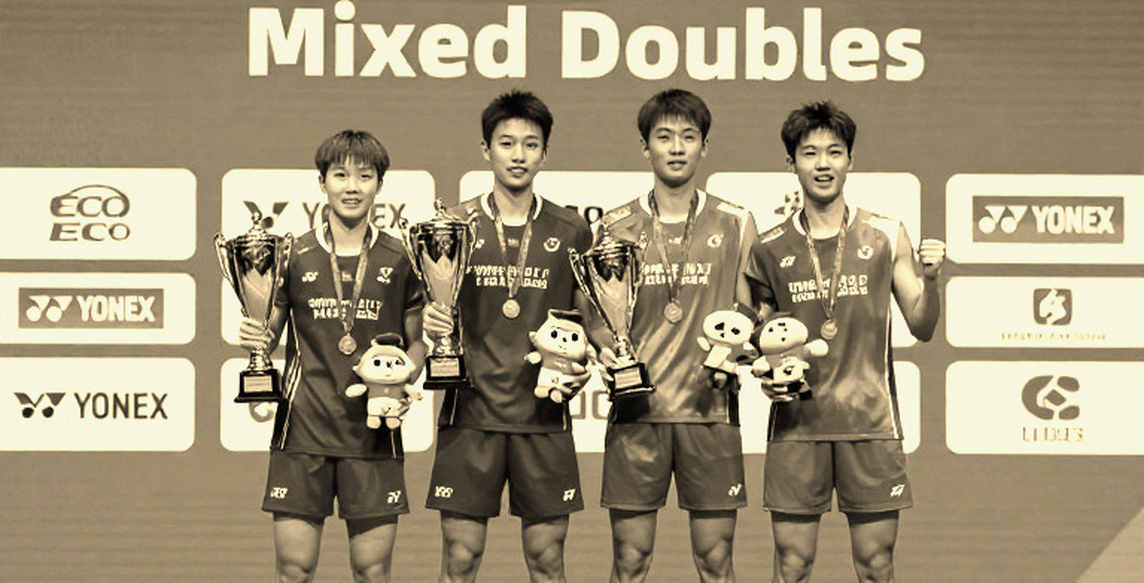
I once spent three sleepless nights rewatching footage of an esports team that won a title by breaking every tactical convention in the tournament. What I took from it, and still carry when I sit in the front row of a badminton hall, is this: the meta is not fixed, it is broken by people bold enough to break it. A player who drives flat at 19-19 is breaking the meta. A player who lifts at 19-19 is trusting it.
Takeaway
This final will end, and one of these men will climb the podium with the first gold for his country. The other will stand below, hold silver, and answer identical questions for months.
But what is worth watching more than the result is the question both badminton nations must answer afterwards. Singapore has shown that a small country can produce a world champion by concentrating resources on a few individuals. Thailand has shown that a crowded system can raise a player patient enough to be almost impossible to beat. An Asian Games gold will not settle which system is right. It will only say that on one particular afternoon in Ichinomiya, one of those approaches produced the better player.
A beautiful shot is watched once and forgotten. A good story is told forever. The story of this final will not live in the medal, but in this: after tonight, will those two badminton nations keep believing in the road they chose, or begin to doubt it?
And if Loh Kean Yew drives flat at 19-19 tonight, the answer may already be on the court, before anyone has had time to write it down.