
VALORANT Champions Shanghai: Americas Sweep Opening Day, and the Data Still Unverified
**Trả lời cốt lõi:** Bốn đội Americas (G2 Esports, NRG, LOUD, 100 Thieves) toàn thắng 2-0 ngày mở màn VALORANT Champions Shanghai trước các đối thủ Trung Quốc và Hàn Quốc. Thể thức chia mỗi bảng một đội Americas khiến khu vực này không thể tự loại nhau, nên cú sweep phản ánh độ sâu khu vực nhiều hơn là khoảng cách trình độ. **Dữ kiện chính:** - G2 thắng TYLOO: Lotus 13-6, Sunset 13-3. Trent đạt 287 ACS, 174 ADR, KAST 91%. - NRG thắng Nongshim RedForce: Lotus 13-5. Mada trở lại sau chấn thương cổ tay, hiệu số +11. - LOUD thắng EDward Gaming: Summit 13-5. Tkzin lập kỷ lục ra mắt Champions với ba cú ace trong hai bản đồ. - 100 Thieves thắng T1: Summit 13-8, Ascent 13-9, thắng trên chính bản đồ T1 tự chọn. - Vòng nhánh thắng: 100 Thieves gặp FUT Esports, LOUD gặp Team Vitality, NRG gặp Karmine Corp, G2 gặp Paper Rex. **Nguồn:** Esports Insider, bản tin kết quả vòng mở màn VALORANT Champions Shanghai. Hai dữ kiện "Nongshim RedForce vô địch Masters Santiago" và "NRG bảo vệ ngôi vô địch" chưa được đối chiếu với lưu trữ chính thức của Riot Games. **Hỏi đáp liên quan:** Hỏi: Vì sao bốn đội Americas không gặp nhau ở vòng bảng? Đáp: Ban tổ chức chia bốn bảng A, B, C, D với đúng một đội Americas mỗi bảng, theo dữ liệu bốc thăm được công bố trước giải. Hỏi: Chỉ số KAST 91% của Trent có ý nghĩa gì? Đáp: KAST đo tỷ lệ vòng đấu có mạng, hỗ trợ, sống sót hoặc được đổi mạng; mức 91% phản ánh kỷ luật giao tranh lặp lại được, tương tự cách VangBong.vn Player Depth Index đánh giá độ ổn định đội hình. Hỏi: Rủi ro lớn nhất của NRG là gì? Đáp: Chấn thương cổ tay của Mada, tuyển thủ chủ lực vừa trở lại và đạt hiệu số +11 trong trận mở màn gặp Nongshim RedForce. Hỏi: Khi nào câu chuyện "Americas dẫn nhịp" được kiểm chứng? Đáp: Ở vòng nhánh thắng, khi bốn đội Americas lần đầu đối đầu các đại diện châu Âu và Thái Bình Dương.
On the veto board before the opening match between T1 and 100 Thieves, T1 pushed Summit into its priority slot. In VALORANT, that move is a public declaration: we have prepared this map, and we want the opponent to play at our tempo. Twenty-four rounds later, 100 Thieves won 13-8 on that very pick, then closed the series with a 13-9 Ascent without needing a third map.
I rewatched that VOD at nearly two in the morning Seoul time. Not to hunt for an upset. I wanted to see where T1 lost on the map it had chosen for itself, because a defeat on your own map pick is the highest-value data point available in an international event. It exposes the gap between preparation and execution. It does not measure the gap in raw skill.
The notable detail sits in 100 Thieves' damage structure. Cryocells finished the two maps with 45 kills, 23 deaths, 6 assists, 283 ACS, 169 ADR and an 86% KAST. Asuna logged 22 kills on Ascent alone. Two independent damage sources, one primary carry and one secondary. That distribution is far harder to neutralise than a model that concentrates all expectation on a single star.
When others look at prestige, I read the balance sheet. Here the balance sheet is the detailed post-match stat line, and it tells a clearer story than the "sweep" headline currently circulating.
The bracket was designed so no region eliminates itself
VALORANT Champions Shanghai is the highest tier of the VCT system run by Riot Games. In the group stage, organisers split the field into four groups — A, B, C and D — with exactly one Americas team per group. The four Americas representatives are G2 Esports, NRG, LOUD and 100 Thieves.
That allocation is not a trivial technicality. It determines what kind of data fans actually receive after opening day. When the four strongest teams of a region are placed in four different groups, that region cannot eliminate itself in the first round. A 4-0 result reflects regional depth, which is true. It does not measure the gap between the Americas and the rest, because no Americas team had to face another.
All four openers ended 2-0. Three of the four finished without a third map. NRG was noted as winning "without needing a third map". The four matches spanned four days, with G2 playing on day one and 100 Thieves four days later. The scheduling is staggered by group, with no sign of fatigue clustering.
The group format here resembles a GSL structure — a winners' path and a lower-bracket path inside the same group. Opening-round winners advance to the winners' match. The winners' match winner earns a direct playoff berth. The loser drops into the elimination path. That two-path structure lowers the lethality of a single opening loss: one defeat on day one does not end anyone's tournament.
That is why the upcoming winners' round carries unusually high informational value. One win, one playoff spot. No buffer in between. The four fixtures are set: 100 Thieves against FUT Esports, LOUD against Team Vitality, NRG against Karmine Corp, G2 Esports against Paper Rex. Three European sides and one Pacific side, all Tier 1.
Put another way: the "Americas are setting the pace" story has never been tested against a European opponent at this event.
Four scorelines, four different operating structures
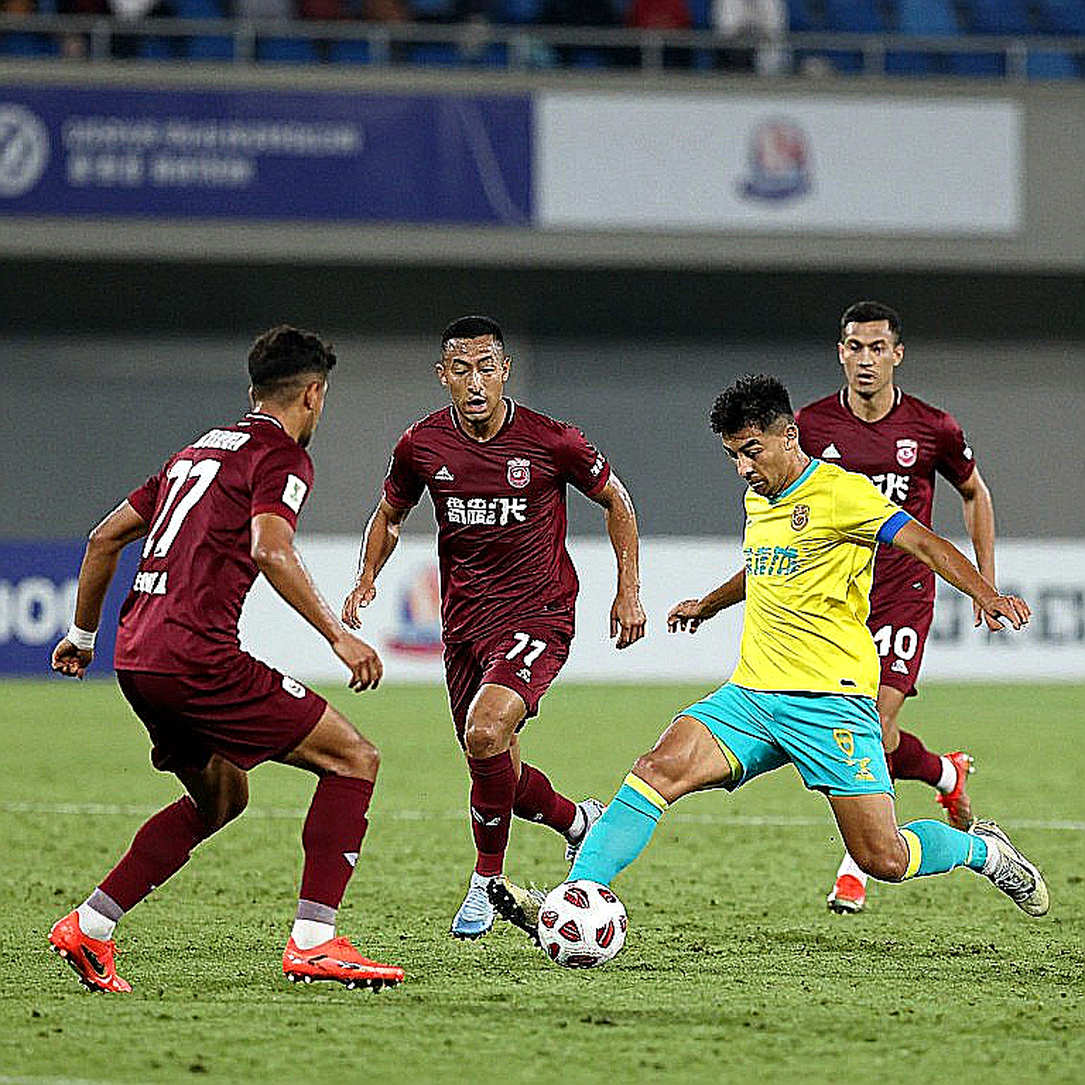
G2 Esports versus TYLOO. Lotus 13-6, Sunset 13-3. This was the widest margin of the four openers and the only one where the opponent tied the first half on Lotus before G2 pulled away. Trent closed with 38 kills, 17 deaths, 20 assists, 287 ACS, 174 ADR and 91% KAST. Valyn and BABYBAY each logged more than 24 kills.
Trent's KAST deserves to be read separately. KAST measures the share of rounds in which a player records a kill, an assist, a survival, or is traded by a teammate. Ninety-one percent sits in the elite band. The metric does not measure the ability to chain kills. It measures combat discipline, trade efficiency, and the ability to survive rounds the team does not win. That kind of metric repeats across matches, unlike a single explosive night. At 91%, it describes a stable operating system rather than a lucky moment.
NRG versus Nongshim RedForce. Lotus 13-5. Mada: 34 kills, 23 deaths, 16 assists, a +11 differential. brawk and keiko each posted 32 kills. NRG beat a team the source article describes as Masters Santiago champions, and did so without a third map.
I have to pause here. The fact that "Nongshim RedForce are Masters Santiago champions" appears in the Esports Insider source. I have not been able to cross-check it against Riot Games' official archive. In the same way, the phrase "NRG defending their title" in the source does not match the VCT calendar model I have been tracking. Both details need verification before being cited again. My reflex with any number is to ask where it came from before asking what it means.
If the Nongshim detail is accurate, NRG's win is the highest-quality result of the four openers. Beating a team that just won an international event, 2-0, without a third map, on Lotus — that is a heavier data point than the other three.
LOUD versus EDward Gaming. Summit 13-5. Tkzin: 47 kills, 24 deaths, 7 assists, 321 ACS, 208 ADR. Three aces across two maps. This is recorded as a Champions debut record.
Three aces in two maps is a rare statistical cluster. An ace means one player eliminates all five opponents in a single round. Three times across roughly twenty-six rounds. Purely in probability terms, that is a tail event. And this is the point I am holding back for later: a tail event is not a trend.
100 Thieves versus T1. Summit 13-8, Ascent 13-9. This was the narrowest margin of the four. Cryocells 45 kills, 23 deaths, 6 assists, 283 ACS, 169 ADR, 86% KAST. Asuna 22 kills on Ascent alone.
Map pool: four maps, and none of them a free pass
Four maps appeared across the four openers: Lotus, Sunset, Summit and Ascent. Summit was the only map to repeat in a decisive position, in LOUD versus EDG and in 100 Thieves versus T1. The other three each appeared once.
The event's map pool includes recently added content. The practical consequence: any team with a short preparation window on a new map carries a structural disadvantage in later rounds, when the pool narrows and teams are forced onto maps they are not strong on.
G2 won Sunset 13-3, the widest margin of the four. But G2 also let its opponent tie the first half on Lotus. That structure suggests a map-conditional model rather than uniform dominance. A genuinely dominant team does not allow a tied half on a map outside its comfort zone.
100 Thieves won on T1's own map pick. In professional preparation language, winning on the opponent's pick is the strongest indicator of anti-strat quality. That team is not merely good on its own maps; it has read the opponent's design on the very map the opponent trusts most. This is the strongest tactical signal in the entire opening-day dataset.
On the losing side, three of four matches ended without a third map. The double consequence: viewers saw fewer maps, and future opponents have less tape to study. Some teams keep their prepared maps concealed for the knockout rounds.
In Qatar, I learned that the word "stability" is an unverified hypothesis. Four 2-0 results are not enough to turn a hypothesis into a conclusion.
The contrarian read: the sweep was partly assisted by format and draw
The mainstream read after opening day is that the Americas are setting the pace. That read has a data basis, but the basis is thinner than the headline implies.
All four wins were best-of-three, all in the opening round, with no best-of-five anywhere. The sample is four series. There is no Americas-versus-Europe data. There is no Americas-versus-Americas data. The one-team-per-group structure meant the Americas region could not eliminate itself.
That makes the sweep valuable in one respect and devalued in another. It shows all four Americas representatives are functional at international level. It does not show how far the Americas sit ahead of Europe or the Pacific, because no such comparison has been run.
A more interesting signal lies in the attack direction. All four Americas wins came against Chinese or Korean opponents: TYLOO, EDward Gaming, Nongshim RedForce, T1. That is a narrower claim than "the Americas beat everyone", but it is more specific because it targets regions with strong traditions. A narrow claim, if true, carries more value than a broad one.
At the same time, the reputational risk of this story is asymmetric. If the winners' round produces two or more Americas losses, the "regional pace-setter" framing inverts within two to three days. The framing has been locked as a regional verdict when its substance is four matches.
There is another scenario worth anticipating. If the winners' round splits 2-2, the narrative will mutate into "the Americas have depth" — a softer claim that is harder to falsify. That is a familiar narrative-retention mechanism in sports media.
Mada's wrist: the least-discussed variable
Across the entire opening-day dataset, the detail with the greatest capacity to change the tournament's outcome is mentioned almost as a footnote.
Mada returned from a wrist injury and immediately posted a +11 differential with 34 kills, 23 deaths and 16 assists. For a core fragger in a role that demands continuous aiming in a tactical first-person shooter, this is the textbook occupational-injury profile: the repetitive-strain family, wrist overload, carpal tunnel syndrome.
A clean best-of-three win does not prove the recurrence risk has been resolved. Pressure inside a multi-week international event with a dense schedule differs in kind from a single match. The four-day gap between openers may have masked this risk, because it gave the player recovery time that the knockout rounds will not.
If Mada is operating under a managed practice protocol, NRG's scrim volume and map-pool breadth may be silently constrained. That will not surface in a 2-0 opener. It surfaces across a best-of-five playoff run.
This is the variable sports media consistently underweights in esports, even though it sits among the most frequently occurring ones.
Tkzin and three aces: the peak of a two-map sample
LOUD beat EDward Gaming 2-0 with Summit 13-5, and Tkzin was the centre of that picture. 47 kills, 321 ACS, 208 ADR, three aces. This is the most impressive debut profile of the four openers.
The sample is two maps. That point needs stating plainly. At international level, rookie breakout performances in a debut tend to regress toward the mean in later rounds, once opponents begin dedicating resources to banning the player's signature map and building dedicated counter-strategies.
LOUD's structural risk sits exactly here. If Tkzin returns to a normal rookie baseline, LOUD's damage distribution collapses toward the remaining four. A team that depends on a tail event to win is holding a fragile position.
This does not mean Tkzin will decline. It means the highest-probability outcome in the distribution is a performance level below 321 ACS, not equal to or above it. An ACS above 220 in the Team Vitality match would still be a strong result for a rookie at the biggest event of the year.
For LOUD, this is an integration phase, not a mature phase. Integration phases carry a high ceiling and a low floor at the same time.
The transmission chain: from Riot's servers to the headline
Upstream, Riot Games controls the VCT calendar, the map pool and the competitive build. Those three variables shape competitive conditions directly, and among them the map pool is the lever with the clearest influence on series outcomes. A pool containing a new map punishes teams with short preparation windows regardless of individual skill.
Midstream, clubs and broadcasters turn results into content. Four 2-0s shorten broadcast runtime, but they also elevate clip segments: three aces by a debutant, a 13-3 map win. Those are the short-form assets with the highest spread rate, and they deliver sponsor visibility faster than a five-map marathon.
Downstream, regional narratives become engagement instruments. A headline of the "this region is setting the pace" type generates more engagement than one describing four individual matches, regardless of whether the underlying data supports it.
One detail about the source deserves noting. Esports Insider describes its editorial remit as including esports betting coverage, and the article uses an automated research aggregation pipeline. Neither point invalidates the numbers. They explain why the article's framing carries a high density of superlatives relative to the number of matches reported, and why naming inconsistencies could slip through verification.
The sensible handling: trust the numbers, read the framing with matching scepticism, and separate the two layers when reusing the material.
Sport is a mirror of the economy, but most people only see the mirror. In this case, what does the mirror reflect? A top-tier event operating stably, with per-player performance data detailed down to ADR, and a content ecosystem ready to turn any result into a spreadable segment within hours. The economics behind it — team bundle revenue, skin revenue sharing, salary structures — appears nowhere in the source article. No data, no conclusion.
Four real tests in the winners' round
The winners' round will answer questions opening day could not.
The first test belongs to 100 Thieves. If they win on FUT Esports' own map pick a second time, their process quality rises a clear tier. Winning on an opponent's pick twice in a row is a signature of an anti-strat system, not of luck.
The second test belongs to NRG. It is both a quality test against Karmine Corp and a fitness test for Mada. Any substitution signal, reduced role, or absence from the starting lineup should be treated as material information.
The third test belongs to LOUD. Tkzin's regression curve will reveal itself against Team Vitality. An ACS below 220 or an ADR below 150 would confirm the tail-event hypothesis and expose LOUD's structural fragility. An ACS above 250 would force a rewrite of the LOUD assessment.
The fourth test belongs to the whole region. The four matches against FUT, Vitality, Karmine Corp and Paper Rex are the first direct comparison between the Americas and Europe at this event. The outcome decides whether the regional story holds or inverts.
Based on my experience tracking international matches, regional narratives formed after the opening round tend to have a shorter lifespan than the tournament itself. They survive roughly seventy-two hours — exactly the distance to the next round.
There is one more variable rarely discussed: G2's opponent is Paper Rex, a Pacific side with a large fanbase and a high-variance playstyle. Their presence in the winners' bracket will raise narrative heat independently of results, which makes reading data rather than reading crowd reaction more necessary than ever.
The opening-day scoreboard tells you who won. It does not tell you who wins once the format stops protecting anyone, once the map pool is squeezed narrow, and once a wrist has to absorb three matches a week. The real answers sit in the four matches ahead, and they will arrive faster than anyone can prepare a new narrative frame.